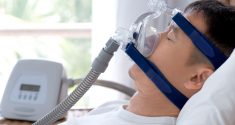
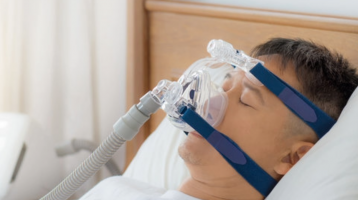
A drug called sulthiame could help people with obstructive sleep apnea breathe more easily at night and sleep better overall. The findings come from a European clinical trial in which the University of Gothenburg played a key role. Researchers say the results open up the possibility of drug treatment for patients who have difficulty tolerating CPAP masks.
The study results were published in The Lancet. A total of 298 people with moderate to severe sleep apnea participated in the study. One-quarter of the participants received a placebo, while the rest were treated with varying doses of sulthiame. The study was conducted in four European countries and followed a double-blind design, meaning that neither the participants nor the researchers knew who was receiving the active drug.
The Effect of Sulthiame
Sulthiame belongs to the group of so-called carbonic anhydrase inhibitors—these are active ingredients that affect an enzyme in the body involved, among other things, in regulating acid-base balance. This enzyme (carbonic anhydrase) plays a role in how the body reacts to carbon dioxide (CO₂) and oxygen. When Sulthiame inhibits this system, it causes the body to react more sensitively to rising CO₂ levels. Put simply: the respiratory drive is strengthened.
 This is precisely where the potential benefit lies for obstructive sleep apnea. In this condition, breathing pauses occur at night because the airways collapse. Although sulthiame does not act directly on the airways, it can:
- stabilize breathing
- reduce the frequency of breathing pauses
- improve blood oxygen levels
As a result, patients often sleep more soundly and wake up less frequently.
Study Shows Significant Reduction in Breathing Pauses
Patients who received higher doses of Sulthiame experienced up to 47 percent fewer breathing pauses during sleep compared to those who received a placebo. They also showed improved oxygen levels overnight. Sulthiame appears to work by stabilizing the body’s own respiratory control and increasing the respiratory drive. This helps reduce the likelihood that the upper airways will collapse during sleep, which is the main cause of obstructive sleep apnea. Most side effects reported during the study were mild and temporary.
Jan Hedner, senior professor of pulmonary medicine at the Sahlgrenska Academy at the University of Gothenburg, played a leading role in the study. “We have been working on this treatment strategy for a long time, and the results show that sleep apnea can indeed be influenced pharmacologically. This feels like a breakthrough, and we are now looking forward to larger and longer-term studies to determine whether the effect persists over time and whether the treatment is safe for broader patient groups,” says Jan Hedner. Ludger Grote and Kaj Stenlöf from the University of Gothenburg also made important contributions to the research.
Sleep Apnea Can Have Significant Health Consequences
Obstructive sleep apnea is a common but often underestimated condition in which the upper airways repeatedly collapse during sleep. During these episodes, the muscles in the throat relax so much that the airways become partially or completely blocked. This results in brief pauses in breathing that can last from several seconds to over a minute. The body responds with an arousal reaction, allowing breathing to resume—usually without the person affected being able to recall it the next morning.
These repeated interruptions cause sleep to become highly fragmented, preventing it from fulfilling its restorative function. At the same time, the oxygen level in the blood drops during these breathing pauses, placing the body in a state of chronic stress. Among other effects, this activates the sympathetic nervous system—the body’s “stress mode”—and leads to increased release of stress hormones.
In the long term, this can have significant health consequences. Obstructive sleep apnea is closely linked to high blood pressure, as the nightly drops in oxygen levels and stress responses can permanently raise blood pressure. The risk of cardiovascular disease also increases, as blood vessels and the heart are damaged by repeated oxygen deprivation and stress. The risk of stroke is also elevated. Furthermore, the condition affects metabolism. Impaired sleep quality and hormonal changes can reduce insulin sensitivity, thereby increasing the risk of type 2 diabetes. Overall, it is evident that untreated sleep apnea not only impairs quality of life through daytime sleepiness and concentration problems but can also lead to serious chronic conditions in the long term.
Many Patients Cannot Tolerate CPAP Treatment
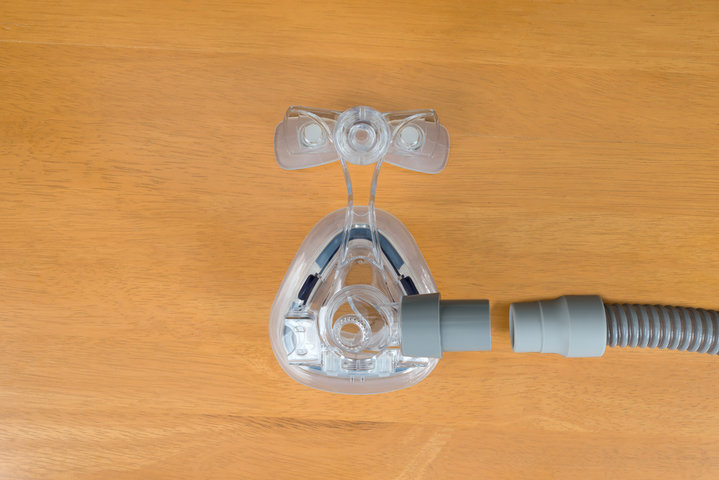
Although sleep apnea is widespread, there is currently no medication that directly treats the underlying cause. The most common therapy is continuous positive airway pressure (CPAP), which uses a mask to keep the airways open during sleep. While CPAP is highly effective, many patients find it difficult to use. Up to half of patients stop using the device within a year because the mask is uncomfortable or interferes with sleep.
 An alternative, particularly for mild to moderate sleep apnea, are special dental splints known as mandibular advancement splints. These keep the lower jaw slightly shifted forward during sleep, keeping the throat open and facilitating breathing. Many patients find this method more comfortable, even if its effectiveness may fall slightly short of CPAP therapy. In addition, lifestyle changes play an important role. Being overweight, in particular, is a significant risk factor, which is why weight loss can often lead to a marked improvement in symptoms. Avoiding alcohol in the evening, regular physical activity, and sleeping on one’s side can also help reduce breathing pauses.
In certain cases, surgical interventions may also be considered, such as when anatomical abnormalities like enlarged tonsils or a narrow throat are present. The goal of such surgeries is to permanently widen the airways. Another modern treatment option is so-called nerve stimulation, in which a small pacemaker is implanted to activate the tongue muscles during sleep, thereby preventing the tongue from falling back.
Drug treatments are currently still under development and have so far played only a minor role. Sulthiame is an already approved medication that has been used to treat a form of epilepsy in children. Researchers are now investigating whether it could also be used for the pharmacological treatment of sleep apnea.
You may also be interested in...
-

Poor sleep quality can have a negative impact on memory. Research has already shown that…
-
The traditional medical point of view regarding the depth of sleep is that it can…