New data from the University of Michigan’s annual panel study “Monitoring the Future” shows that the use of substances to promote sleep is widespread among young adults. The study, funded by the National Institute on Drug Abuse, found that 22% of Americans aged 19 to 30 reported using cannabis, alcohol, or both to help them sleep better. Cannabis was used much more frequently than alcohol to help fall asleep. About 18% of young adults reported using cannabis to help fall asleep, while 7% reported using alcohol for the same reason. Of those who had used cannabis at some point in the past year, 41% reported that helping them fall asleep was a reason for use.
Experts Warn that These Substances can Impair Sleep Quality
Researchers warn that taking substances to help fall asleep can cause problems in the long run. “Taking these substances to fall asleep can backfire, as they can impair the ability to sleep through the night and the quality of sleep,” said Megan Patrick, research professor at the Institute for Social Research and principal investigator of the MTF panel study. “In the long term, they actually seem to disrupt sleep. The fact that so many young adults reported using cannabis to fall asleep is alarming.”
 The study, published in JAMA Pediatrics, examined the responses of 1,473 young adults from across the United States. The researchers found significant differences in the use of substances to fall asleep based on gender and ethnicity. Women were nearly twice as likely as men to use cannabis to fall asleep. Participants who identified as transgender were more than four times more likely than men to report using cannabis to fall asleep. Black young adults were three times more likely than white young adults to report using alcohol as a sleep aid.
Long-Term Use May Increase Risks
Patrick said that repeated use of cannabis or alcohol to fall asleep may exacerbate rather than solve sleep problems. “Long-term, regular use of these substances to fall asleep can lead to worse sleep problems and an increased risk of substance abuse,” she said. “For example, frequent use of a substance to fall asleep can lead to tolerance, so that more is needed to achieve the same effect. In other words, instead of leading to better sleep, this can lead to additional sleep problems and escalating substance use.” This study is one of the first national investigations to examine in depth how and why young adults use substances to regulate sleep. The Monitoring the Future panel study tracks nationally representative groups of U.S. high school students over time and follows their substance use into adulthood.
Patrick emphasized that many young adults believe cannabis or alcohol can improve sleep, even though there is evidence to the contrary. “Unfortunately, there is a misconception that substance use can help with sleep problems, but it can actually make the situation worse,” she said. “High-quality sleep is critical for mental health and mood regulation. Young adults told us that they use cannabis to fall asleep, but this can actually worsen their sleep problems. They need to be aware of the potential risks.”
Because sleep problems and substance use often co-occur in young adulthood, researchers say clinicians should be alert to this connection. The findings underscore the importance of recognizing both problems and offering coordinated support when needed. “Healthcare providers should be aware of how common sleep problems and substance use are in young adulthood,” Patrick said. “And that many young adults use cannabis specifically to fall asleep. People who are trying to manage sleep problems should talk to their doctor.
The Role of Melatonin
Regardless of age, natural methods often do not work to ensure good sleep quality. Supplementing with melatonin can be helpful here. The pineal gland naturally produces melatonin in response to low light conditions. Production of this hormone begins when the brain detects that it has become darker in the environment and continues throughout the evening and night hours. When the sun rises and it becomes lighter, the amount of melatonin produced by the pineal gland decreases and eventually stops altogether.
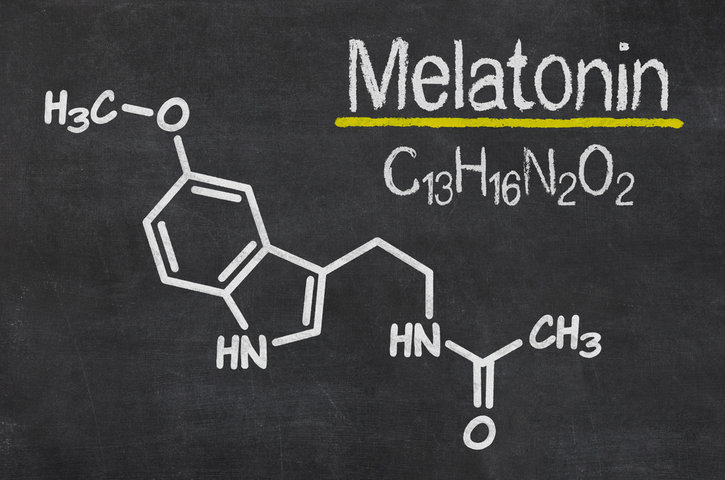 For decades, researchers studied how melatonin production helps the brain control sleep patterns. This early research led to melatonin supplements designed to promote sleep, which are particularly helpful for people who have sleep disturbances due to shift work or jet lag. Similarly, people who suffer from insomnia may also benefit from taking a melatonin supplement, as additional melatonin increases hormone levels in the brain. Many health disorders may be due to an imbalance in melatonin levels. For example, seasonal depression is usually related to melatonin being produced earlier or later in the day, as light is often obscured during the cold months. In addition, many older people suffer from a slow decline in melatonin levels, leading to insomnia and problems sleeping through the night.
Pulsatile Release
Current research suggests that a unique formulation, also known as pulsatile melatonin release, may be the answer to the sleep problems of many people. Melatonin has a very low half-life, with half of the hormones released disappearing from the bloodstream after only 20 minutes. As a result, it is not released just once per night, but in several bursts. In order to fall asleep and stay asleep, a large amount of the hormone must first be released, followed by smaller amounts throughout the night. Supplements that release melatonin in bursts immediately release a large amount of the hormone, followed by smaller amounts over the next seven to eight hours. This is enough melatonin to fall asleep, and the constant supply of melatonin also ensures that you stay asleep. The goal of this type of melatonin release is to keep melatonin levels at a certain level throughout the night in order to mimic the body’s natural (healthy) release pattern as closely as possible.
You may also be interested in...
-

It is well established that deep sleep is essential to overall health and well-being, both…
-
Could a higher dose of the supplement melatonin be the key to a good night's…