Sleep and wakefulness appear, at first glance, to be two clearly distinct states. Either we are awake and alert, or our body and brain are asleep. However, modern sleep research is increasingly showing that this distinction may not be quite so clear-cut. In fact, individual areas of the brain can temporarily develop patterns of activity that typically occur during sleep—even while a person is outwardly fully awake. This phenomenon is known as “localized sleep” and is attracting increasing attention in neuroscience.
Particularly interesting in this context are new findings from Parkinson’s disease research. They suggest that unusual sleep patterns during wakefulness may be linked to certain neurological conditions.
When Individual Brain Regions Enter a Sleep-Like State
During deep sleep, the brain exhibits characteristic slow electrical activity patterns. These so-called slow waves arise from the coordinated interaction of large groups of nerve cells. Normally, they occur primarily during specific sleep phases. However, similar activity patterns can also arise while a person is awake. In such cases, not all areas of the brain are necessarily affected at the same time.
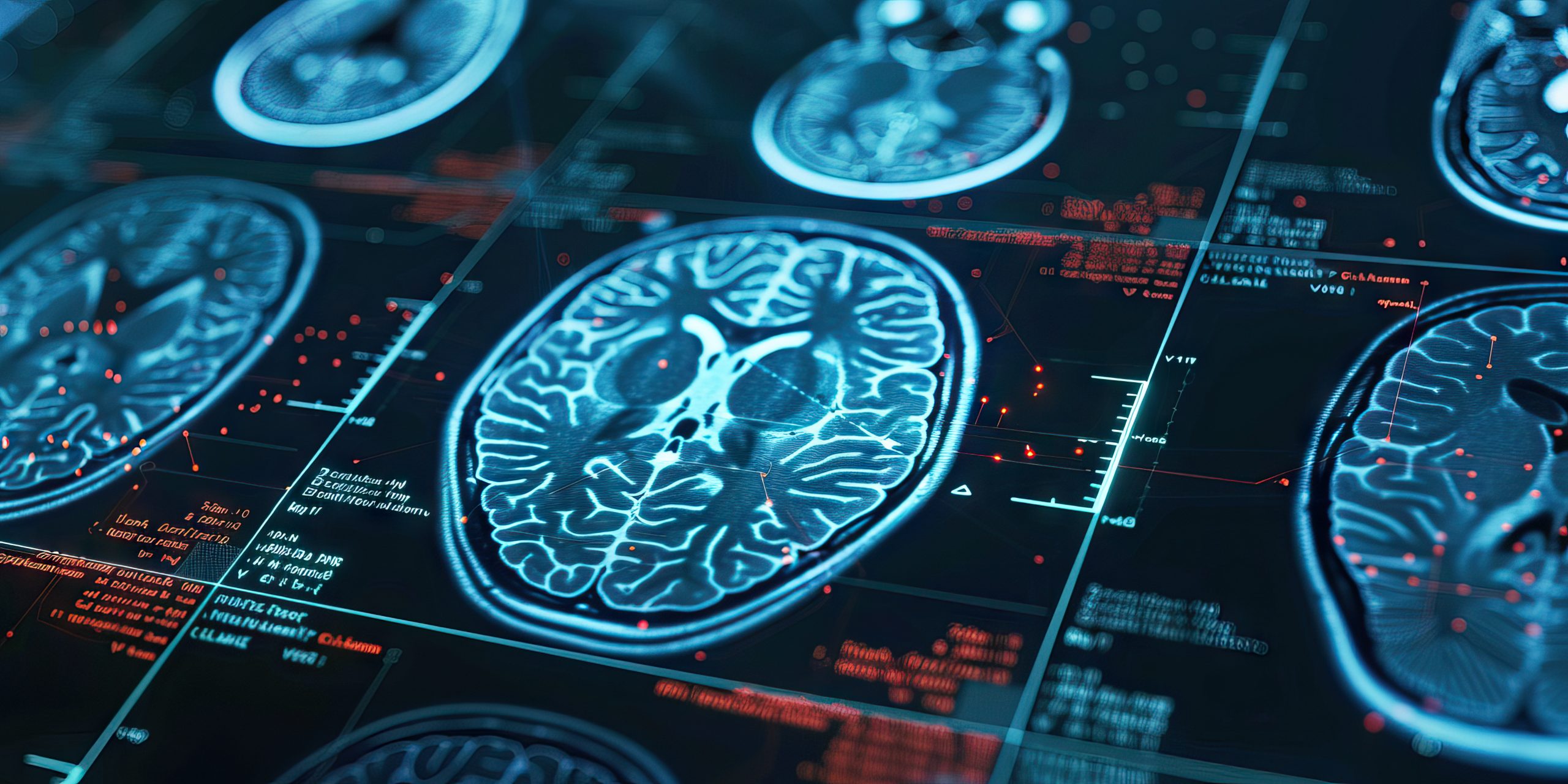
This is referred to as “localized sleep.” Individual neural networks temporarily exhibit activity that more closely resembles a sleep state, while other areas of the brain remain awake and active. This phenomenon could explain why people sometimes experience concentration problems, brief lapses in attention, or slowed reaction times despite getting enough sleep.
Parkinson’s Disease: When Sleep-Wake Regulation Is Thrown Off Balance
Parkinson’s disease is one of the most common progressive disorders of the nervous system. It primarily affects areas of the brain responsible for controlling and coordinating movement. Typically, the disease begins rather gradually and develops over a long period of time. As a result, early signs are not always recognized immediately or are initially mistaken for normal signs of aging.
The neurotransmitter dopamine plays a key role in this process. It is produced, among other places, in a specific region of the brain called the substantia nigra. In Parkinson’s disease, the nerve cells in this region that produce dopamine gradually die off. This leads to a dopamine deficiency, which impairs communication between different areas of the brain. As a result, it becomes increasingly difficult to control movement patterns. Among the most well-known symptoms are muscle stiffness, slowed movements, and tremors, which can occur especially when at rest. For example, people with Parkinson’s have difficulty initiating movements, their steps become shorter, or everyday activities such as getting dressed and writing become increasingly difficult. However, Parkinson’s does not progress the same way in everyone. Some people primarily develop movement disorders, while for others, non-motor symptoms also play a major role.
Parkinson’s does not affect only movement. Sleep disturbances, daytime sleepiness, concentration problems, depressive moods, and changes in perception can also occur. Some people with Parkinson’s suffer from a disrupted sleep-wake cycle, vivid dreams, or pronounced daytime fatigue. As the disease progresses, cognitive impairments and hallucinations may also develop. It is precisely these non-motor symptoms that are increasingly becoming the focus of research. Scientists are particularly interested in how Parkinson’s affects the brain’s natural sleep and wake processes.
A recent study from 2026 investigated whether sleep-like brain activity can occur in people with Parkinson’s even while they are awake. To do this, the researchers examined electrical brain activity using a high-resolution electroencephalogram (EEG). They compared 84 people with Parkinson’s disease to 30 healthy older control subjects. The results showed that slow brain waves occurred more frequently in Parkinson’s patients while they were awake. Such slow waves are normally associated primarily with deep sleep. Their occurrence during wakefulness could indicate that certain areas of the brain temporarily shift into a sleep-like state of activity. Of particular interest was the fact that more pronounced changes were associated with hallucinations and poorer performance on certain cognitive tests. The researchers thus found evidence that unusual sleep-like activity during the day may be linked to changes in mental performance and perception.
Why do Hallucinations Occur in Parkinson’s Disease?
The findings provide further insight into the complex changes that Parkinson’s disease can trigger in the brain. They also illustrate that the disease should not be understood exclusively as a movement disorder. The regulation of sleep and wakefulness, as well as the processing of sensory input, may also play an important role. However, it has not yet been conclusively determined whether the unusual brain waves directly contribute to the symptoms or are rather a side effect of the neurological changes. Further studies are needed to determine the significance of these observations for the course of the disease and potential future diagnostic procedures.

Hallucinations are among the possible non-motor symptoms of Parkinson’s disease. For example, those affected perceive people, animals, or objects that are not actually present. Such changes in perception can have various causes. In addition to changes in certain neurotransmitter systems in the brain, sleep disorders, medications, and changes in information processing may also be involved.
The new study offers another possible explanation: If certain brain regions temporarily exhibit sleep-like activity patterns while awake, this could influence the processing of external sensory input. However, it has not yet been conclusively determined whether these brain waves actually contribute to the development of hallucinations or are rather a side effect of other changes in the brain.
What Does this Mean for Our Natural Sleep-Wake Cycle?
The human body follows a complex biological clock. Among other things, our internal clock controls when we become tired, when we are particularly alert, and how various bodily functions operate throughout the day. It is not only external influences such as daylight and darkness that play a role here. The activity of individual brain networks also influences how alert and productive we feel.
Research on local sleep shows that wakefulness is apparently not a state in which all areas of the brain must always be equally active. Individual brain regions may temporarily exhibit sleep-like patterns, while others remain active. Especially in the case of neurological disorders such as Parkinson’s disease, this knowledge could help us better understand changes in brain function. It also highlights how important the interplay between sleep, the internal clock, and brain activity is for our mental performance.
Could Brain Waves Help Diagnose Parkinson’s in the Future?
The study opens up interesting avenues for further research. If certain EEG patterns regularly occur alongside neurological symptoms, they could potentially provide additional clues about changes in brain function in the future. It would be particularly interesting to determine whether such abnormalities occur even in earlier stages of the disease and whether they change as the disease progresses.

However, research is still some way from that. The results so far are not sufficient to use local slow brain waves as a standalone diagnostic test for Parkinson’s. Further studies must clarify how specific these changes are and whether they also occur in other neurological disorders or in cases of severe sleep deprivation.
Sleep and Wakefulness are More Closely Linked than Previously Thought
Modern sleep research increasingly shows that sleep and wakefulness do not have to be completely separate and rigid states. While we feel awake and consciously perceive our surroundings, individual areas of the brain can apparently already develop sleep-like activity patterns. This phenomenon highlights just how complex the regulation of our brain activity actually is. This insight could play a particularly important role in neurological disorders such as Parkinson’s disease. Current research findings suggest that changes in sleep-wake regulation not only affect nighttime rest but may also have implications for attention, memory, and perception during the day.
These findings are also interesting from a chronobiological perspective. Our internal clock ensures that numerous physical and mental processes follow a natural daily rhythm. Among other things, it influences hormone release, body temperature, sleep pressure, and our performance. If the interplay of these processes is disrupted, it can affect our well-being and sleep quality.
Research on localized sleep therefore opens up new perspectives on the question of how closely the activity of individual brain regions is linked to our sleep-wake cycle. In the future, it might be interesting to investigate more closely whether such unusual brain activity also occurs in other neurological disorders and what significance it has for cognitive performance.
Many questions remain unanswered. However, the findings to date show that sleep is far more than just a nightly rest period. It is an important component of our brain health and is closely linked to the function of our entire nervous system. A better understanding of these connections could, in the long term, help us detect sleep disorders and neurological changes earlier and conduct more targeted research.
You may also be interested in...
-

According to a study published online in Neurology®, the medical journal of the American Academy…
-
New research indicates that lower proportions of certain sleep stages are associated with reduced brain…