For decades, the matter seemed clear: light regulates the body’s internal clock. In the morning, sunlight hits the retina, the brain stops producing melatonin, and the body switches to a state of wakefulness. In the evening, light intensity decreases, drowsiness sets in, and the body’s internal clock prepares the body for sleep and recovery. This model has shaped modern chronobiology since the 1970s and remains the foundation of sleep research to this day. But in recent years, the picture has begun to change. Researchers have increasingly discovered evidence that biological time is organized far more complexly than previously assumed. It is not only light that influences human circadian rhythms. Diet, exercise, temperature, and social activity also interfere with the body’s finely tuned timing system. Now another factor is coming into play—one that has long been largely overlooked: oxygen.
A study from 2025 is therefore attracting an unusually high level of attention among experts. Scientists were able to show that even a moderate reduction in oxygen levels during the night measurably alters the release of the sleep hormone melatonin. The subjects’ internal clocks shifted forward—without light therapy, medication, or sleep deprivation. Only the air they breathed had been altered. The idea that oxygen itself could act as a biological timer may fundamentally change our understanding of human time perception.
Why Chronobiology is on the Verge of a Potential Revolution
The human organism does not function continuously and uniformly. Nearly every bodily function follows rhythmic fluctuations. Hormone levels rise and fall at specific times of day; body temperature and blood pressure change throughout the day; even immune cells and metabolic enzymes operate according to fixed biological schedules.
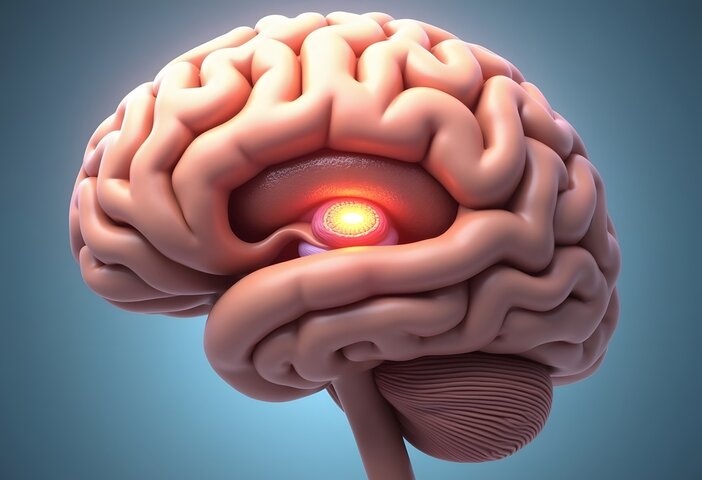 At the center of these processes is the so-called suprachiasmatic nucleus, a tiny region in the hypothalamus of the brain. It functions as the central control center for circadian rhythms. For a long time, it was viewed primarily as the body’s light receptor. In fact, specialized cells in the retina are extremely sensitive to daylight and send signals directly to this center. But we now know that biological time does not originate solely in the brain. Almost every cell in the body has its own molecular “clocks.” These cellular clocks must be constantly synchronized. This is precisely where the new significance of oxygen comes into play.
For oxygen is not merely a chemical substance used for energy production. For the organism, it is also a constant environmental signal. Any change in oxygen availability forces the body to adapt. From an evolutionary perspective, this was vital for survival over millions of years. The crucial question, therefore, is: Could the human body interpret fluctuations in oxygen in a similar way to changes in light?
The Surprising Effect of Nocturnal Hypoxia
The researchers behind the study, published in 2025, examined healthy participants under strictly controlled laboratory conditions. The participants spent several hours in an environment with reduced oxygen levels. The conditions roughly corresponded to the air at an altitude of 2,400 meters or the pressure level in modern airplane cabins. The change was moderate. No one suffered from a dangerous lack of oxygen. Nevertheless, the body reacted much more sensitively than expected.
Melatonin production began earlier than under normal conditions. The body’s internal clock shifted measurably. Although the effect lasted only a few minutes, this is precisely where its scientific significance lies. Circadian systems respond extremely sensitively to external stimuli. Even small temporal shifts can influence sleep quality, metabolism, and performance in the long term. What was particularly noteworthy was that the effect occurred independently of the classic light signal. The brain thus apparently received additional information about the body’s physiological state.
The researchers suspect that oxygen sensors interact directly with the molecular clock genes. At the center of this is a protein called HIF-1α—a key regulator of the cellular hypoxia response. When oxygen availability decreases, this system activates numerous adaptive processes in the body. Apparently, it also influences circadian rhythm mechanisms at the same time. This paints a fascinating picture: The internal clock might not only detect how bright the surroundings are, but also how “breathable” the environment appears.
An Ancient Evolutionary Connection
The idea that oxygen could act as a biological timer seems unusual at first glance. From an evolutionary perspective, however, it makes a surprising amount of sense. For much of Earth’s history, oxygen was not a stable environmental factor. The atmosphere of early Earth contained significantly less free oxygen than it does today, and even after the so-called “Great Oxygenation Event” about 2.4 billion years ago, oxygen levels fluctuated considerably depending on region and climate. For early organisms, this meant constant pressure to adapt. Energy production was always linked to the availability of oxygen. Organisms that could flexibly adapt their metabolism, activity, and regeneration to changing environmental conditions had evolutionary advantages.
This is precisely where the connection between oxygen regulation and biological time may have originated. Circadian rhythms likely evolved not only to adapt to light and darkness but also as a protective mechanism against metabolic stress. During the day, the temperature, activity, and energy consumption of many organisms increase. At the same time, the cells’ oxygen demand and oxidative stress change. At night, repair and regeneration processes take center stage. The organism therefore had to learn to coordinate energy balance and cell protection with precise timing. Modern research now shows that these very systems are closely intertwined at the molecular level.
 Of particular importance here is the so-called HIF signaling pathway (“Hypoxia-Inducible Factor”). HIF proteins function as the cell’s central oxygen sensors. When oxygen availability decreases, HIF-1α activates numerous genes that adapt metabolism, promote the formation of red blood cells, or switch energy processes. Surprisingly, this system interacts directly with circadian clock genes such as CLOCK, BMAL1, and PER. This creates a kind of molecular dialogue between time measurement and oxygen regulation. Animal experiments have already shown that fluctuations in oxygen levels can influence circadian rhythms. In mice, hypoxic conditions alter sleep patterns, body temperature, and activity cycles. Studies with fruit flies have also shown that clock genes are sensitive to metabolic stress. Even isolated cell cultures exhibit shifts in their internal molecular rhythms under altered oxygen levels.
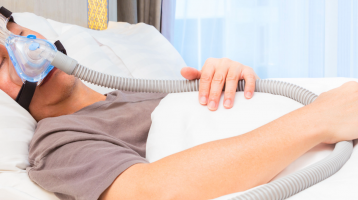
Some researchers therefore now speak of a common “metabolic language” of the organism. According to this view, time measurement and energy balance are not separate systems, but are deeply intertwined. The internal clock may not only register external light conditions but also continuously monitor the body’s energetic state. This would explain why circadian disruptions are often associated with metabolic diseases. Diabetes, obesity, and chronic inflammation frequently occur alongside changes in oxygen supply at the cellular level. Sleep apnea, which involves nocturnal drops in oxygen levels, is also often accompanied by disrupted circadian rhythms.
Against this backdrop, the 2025 human study takes on particular significance. For the first time, it provides evidence that these evolutionarily ancient mechanisms not only exist in animal models or cell cultures but may also have directly measurable effects on the body’s internal clock in humans. Should this be confirmed, it would fundamentally expand our understanding of chronobiology. The biological clock would then not merely be a light-controlled pacemaker in the brain, but part of a comprehensive evolutionary system for synchronizing energy, metabolism, and environmental conditions. The human body would not only “see” time—but possibly also “breathe” it.
What This Could Mean for Sleep and Health
If the hypothesis is confirmed, it would have enormous practical implications. Modern society is increasingly living out of sync with its biological clock. Millions of people work at night, sleep irregularly, or spend their days under artificial light. The consequences are now well documented: sleep disorders, depression, cardiovascular disease, diabetes, and chronic inflammation occur significantly more frequently when circadian rhythms are disrupted. So far, medicine has primarily attempted to counteract this with light therapy or melatonin supplements. But these methods have only limited effectiveness.
New research opens up a radically different perspective: Perhaps the body’s internal clock can also be synchronized via metabolism. Controlled oxygen stimuli could be used in the future to specifically shift biological rhythms. Potential applications include jet lag, shift work, or sleep disorders. This is particularly interesting for aerospace medicine. Astronauts, pilots, and long-distance travelers often suffer from severe circadian desynchronization. Oxygen management could become part of therapeutic strategies in the future. The potential implications for chronomedicine extend even further. It is already known that medications have different effects depending on the time of day. Some cancer therapies show better results and fewer side effects at specific biological times. If oxygen does indeed affect the body’s internal clock, this could also enable new forms of time-controlled therapies.
Between Euphoria and Caution
Despite all the enthusiasm, the research remains in its early stages. The studies conducted so far are small, and many mechanisms are still unclear. No one currently knows exactly how strongly or permanently oxygen can influence the body’s internal clock. Equally open is the question of whether different chronotypes react differently or what risks long-term hypoxia treatments might entail. After all, oxygen deprivation is never biologically trivial. Chronic hypoxia can place a heavy strain on the body. The challenge, therefore, is to harness physiological signals for therapeutic purposes without causing harmful effects.
Nevertheless, current research is already revealing something fundamental: human perception of time is far more closely linked to metabolism than has long been assumed. The internal clock is apparently not an isolated light switch in the brain. It is part of a highly complex biological network that constantly processes information from the environment, respiration, energy balance, and behavior. Perhaps this is precisely where a new chapter in chronobiology begins—one in which not only light determines the rhythm of life, but also the rhythm of our breath.
You may also be interested in...
-

More than 50 percent of Americans use coffee and other caffeinated beverages on a regular…
-
Chronobiology is one of the most studied topics in modern medicine. It is no surprise…
-
Have you heard popular advice to avoid eating at night? Have you ever been told…