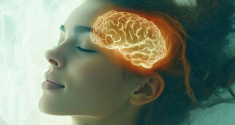
The feeling of having “slept well” doesn’t depend solely on how long you’ve slept. It also reflects how deeply and continuously you feel you’ve slept. Scientists still don’t fully understand what goes on in the brain to produce this sense of deep, restorative rest. A new study by researchers at the IMT School for Advanced Studies Lucca, published in PLOS Biology, points to an unexpected factor. Dreams, especially those that are vivid and intense, may actually make sleep deeper and more restorative rather than interrupting it.
Why We Dream
 Why we dream is still not fully understood, but there are several well-documented theories that complement one another. Dreams occur primarily during REM sleep. During this phase, the brain is very active—especially the areas responsible for emotions and perception—while the prefrontal cortex, which is responsible for logical thinking, is less active. This is why dreams often seem intense, vivid, and at the same time illogical.
The processing of experiences and emotions likely plays a central role. The brain sorts through the day’s impressions, links new information with existing memories, and stabilizes them—a process known as memory consolidation. At the same time, dreams can help reduce emotional stress, process experiences, and solve problems. In addition, there are newer theories such as those proposed by Erik Hoel. His “hypothesis of the over-adapted brain” draws on the concept of overfitting from AI research. According to this, the brain may use dreams to prevent itself from adapting too strongly to concrete everyday experiences. The often bizarre and distorted nature of dreams acts as a kind of deliberate “disruption”: The brain combines impressions in unusual ways, enabling it to recognize patterns more broadly and apply knowledge more flexibly to new situations. Overall, dreams can therefore be understood as a blend of memory processing, emotional regulation, and mental training. Their apparent illogicality, in particular, may serve an important function—namely, making our thinking more adaptable, creative, and resilient.
Deep Sleep and Brain Activity Reexamined
For decades, deep sleep was considered a state in which the brain is essentially “shut down,” with slow brain waves, minimal activity, and low consciousness. According to this traditional view, deeper sleep meant less brain activity. In contrast, dreaming was typically associated with REM sleep (Rapid Eye Movement) and viewed as a sign of the brain being partially “awake.” This, however, leads to a paradox. REM sleep is characterized by intense dreaming and brain activity similar to that of the waking state, yet people often report that this phase still feels like deep sleep.
To investigate this contradiction, researchers analyzed 196 overnight recordings from 44 healthy adults. The participants slept in a laboratory while their brain activity was monitored using high-resolution electroencephalography (EEG). The data came from a broader project funded by a Starting Grant from the European Research Council (ERC) that investigated how different types of sensory stimulation influence the sleep experience.
Dreaming and Perceived Sleep Depth

Over the course of four nights, participants were awakened more than 1,000 times and asked to describe what they had experienced immediately before waking up. They also rated how deeply they thought they had slept and how sleepy they felt. The results showed that people reported the deepest sleep not only when they had no conscious experience, but also after vivid, immersive dreams. In contrast, shallow sleep was associated with minimal or fragmented experiences, such as a vague sense of presence without clear dream content. “In other words: Not all mental activity during sleep feels the same—the quality of the experience, particularly how vivid it is, seems to be decisive,” explains Giulio Bernardi, professor of neuroscience at the IMT School and lead author of the study. “This suggests that dreaming might alter the way brain activity is interpreted by the sleeper: the more vivid the dream, the deeper the sleep feels.”
In other words: Dreams could help the brain “interpret” ongoing activity and classify it as safe, deep sleep, even when the brain is actively processing stimuli. This supports the idea that dreams are not merely a side effect of sleep, but could actively contribute to enhancing the subjective experience of rest and deep sleep. Vivid dreams thus act as a kind of “mental shield”: they organize internal and external activity into a coherent experience, making us feel more refreshed and rested—even if objective sleep measurements show only minimal differences.
How Dreams Might Sustain Deep Sleep
Over the course of the night, another surprising finding emerged. Although the physiological signs of sleep pressure gradually subsided, participants reported that their sleep felt deeper over time. This perceived deepening was closely associated with an increase in the intensity of their dreams. The results suggest that dream experiences may help maintain the sensation of deep sleep, even as the body’s biological need for sleep decreases. The more vivid and immersive the dream experiences were, the more strongly the participants perceived a sense of deep, restorative sleep.
Intense dreams may also help maintain a sense of separation from the external environment—a key feature of restorative sleep—even when parts of the brain remain active. In this state—such as during the processing of stimuli or memories—a vivid dream conveys to the sleeper that they are sleeping “protected” and isolated from the environment. In this way, dreams could act as an internal buffer: they organize neural activity into meaningful, coherent experiences, prevent external or internal disturbances from interrupting the sensation of sleep, and thus play a crucial role in making sleep actually feel restorative. In short: Dreams appear not only to serve the processing of memories and emotions, but also to actively shape the subjective experience of deep sleep and support nighttime recovery.
Dreams as “Guardians of Sleep”
“Understanding how dreams contribute to the sensation of deep sleep opens up new perspectives on sleep health and mental well-being,” says Bernardi. “If dreams help maintain the sensation of deep sleep, changes in dreaming could partly explain why some people feel they are sleeping poorly, even when standard objective sleep metrics appear normal. Rather than merely being a byproduct of sleep, vivid dreams may help cushion fluctuations in brain activity and maintain the subjective experience of deep sleep.” This idea reflects a long-standing hypothesis in sleep research—and even in classical psychoanalysis—that dreams might function as “guardians of sleep.”
The study was conducted as part of a broader collaboration between the IMT School, the Scuola Superiore Sant’Anna in Pisa, and the Fondazione Gabriele Monasterio, where a new sleep laboratory has been established to bring together neuroscientific and medical expertise. This facility supports a multidisciplinary approach to the study of sleep and the sleep-wake cycle and enables researchers to better understand how brain activity interacts with bodily processes. These findings represent a first step in this direction and lay the groundwork for future research into how the dynamics between the brain and the body shape sleep in both healthy individuals and those with sleep disorders.
You may also be interested in...
-

The importance of good nutrition cannot be overstated. What you choose to put into your…
-
Although it is known that sleep improves cognitive performance, the underlying neural mechanisms, especially in…