A research team led by scientists from several Japanese institutions has identified a compound called Mic-628 that directly influences the body’s internal clock. Experiments showed that Mic-628 specifically activates Per1, a core gene that helps regulate the daily biorhythm in mammals.
Faster Recovery from Jet lag in Animal Experiments
miR-628 (also known as miRNA-628) belongs to the microRNAs, a class of very short RNA molecules that do not produce proteins but control gene regulation. Their classic task is to finely regulate the amount of certain proteins by binding to matching messenger RNAs and slowing down or preventing their translation. They can be thought of as molecular “fine tuners.” The researchers found that Mic-628 binds to CRY1, a protein that normally suppresses the activity of clock genes. This interaction promotes the formation of a larger molecular complex known as CLOCK-BMAL1-CRY1-Mic-628. Once this complex is formed, it activates Per1 by acting on a specific DNA site called the “dual E-box.” Through this mechanism, Mic-628 shifts the timing of both the brain’s master clock, located in the suprachiasmatic nucleus (SCN), and the clocks in other organs, including the lungs. Remarkably, these time shifts occurred together and did not depend on when the compound was administered.
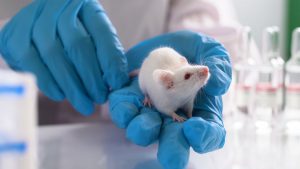
To test the relevance for practice, the team used a mouse model that mimics jet lag by advancing the light-dark cycle by six hours (6-hour advance of the light-dark phase). Mice given a single oral dose of Mic-628 adapted to the new schedule much faster, in four days instead of seven. Further mathematical analysis showed that this steady, one-sided advance is driven by a built-in feedback loop involving the PER1 protein, which helps stabilize the clock change.
Jet lag and its Effects
Jet lag is a temporary disruption of the internal clock that occurs when crossing several time zones in a short period of time, for example during long-haul flights. The internal clock initially remains set to the time at the departure point, while the environment at the destination follows a different day-night rhythm. This throws sleep, hormones, body temperature, and many metabolic processes out of sync.
There are two main types of jet lag. With eastward jet lag, the internal clock has to be set forward, meaning you go to sleep earlier and wake up earlier. This type is usually perceived as more severe and stressful because it works against the natural tendency of the internal clock. With westward jet lag, the daily routine is shifted backward, which is more in line with the biological rhythm and therefore usually easier to cope with. In addition, there is sometimes talk of social jet lag, which is not caused by travel, but by permanently different sleeping times on working days and days off, for example in shift work or very irregular daily routines.
Jet lag manifests itself on various levels. Typical symptoms include sleep problems, such as difficulty falling asleep or staying asleep, early awakening, or severe daytime sleepiness. In addition, there are performance and concentration problems, slowed thinking, reduced attention, and rapid fatigue. Physical complaints also frequently occur, such as headaches, loss of appetite, gastrointestinal problems, or general malaise. On an emotional level, irritability, mood swings, or a feeling of inner restlessness may occur.
Adjusting to earlier schedules, such as traveling east across time zones or working night shifts, requires advancing the internal clock. This type of adjustment is usually slower and more stressful for the body than delaying the clock. Common approaches such as light exposure or melatonin are highly dependent on the exact timing and often lead to uneven results.
Why it is so Difficult to Advance the Clock
Adjusting to earlier schedules is particularly challenging for the human organism because the circadian clock naturally runs slightly longer than 24 hours. As a result, it tends to delay rather than advance. If the sleep-wake rhythm needs to be shifted forward, for example when traveling east or switching from night to day work, this goes against this basic biological tendency. As a result, the adjustment is slower and is experienced as more stressful, both subjectively and physiologically.
When it is necessary to move the rhythm forward, several circadian-controlled processes must be adjusted simultaneously, including melatonin secretion, the nighttime drop in core body temperature, the morning rise in cortisol, and the build-up and breakdown of sleep pressure. However, these rhythms respond at different speeds to time shifts. During the transition phase, this results in internal desynchronization, with some systems already responding to the new schedule while others still follow the old one. This typically manifests itself in fatigue, reduced cognitive performance, sleep disturbances, and vegetative complaints.
 Light is considered the strongest external time cue for the internal clock, but its effect is highly dependent on the time of exposure. Early morning light can advance the clock, while light in the evening or at night causes a delay. The time window in which light triggers an advance is relatively narrow and varies from person to person. If light is used too early or too late, the effect is minimal or even reversed. Since the exact circadian phase status is usually unknown in everyday life, this explains why light exposure often produces inconsistent results in practice.
The same applies to melatonin. Exogenously administered melatonin acts primarily as a temporal signal and not as a classic sleep aid. If taken in the late afternoon or early evening, it can promote an advance of the internal clock; taking it in the morning, on the other hand, leads to a delay. Here, too, the effective time window is limited and varies between individuals. Differences in chronotype, dose, preparation, and simultaneous light exposure contribute to the effects of melatonin varying greatly and, in some cases, not occurring at all.
Advancing the internal clock is also associated with increased physiological stress. During the adjustment phase, sleep is often shortened, sympathetic activity increases, and changes in sleep architecture occur, such as a reduction in deep and REM sleep. Repeated or chronic maladjustment can also lead to changes in hormonal and inflammatory markers. Overall, the organism is forced into activity and wakefulness at a time when it is still biologically programmed for rest. Since Mic-628 consistently advances the clock regardless of the time of administration, it offers a fundamentally different pharmacological approach to circadian adjustment.
What’s Next for Mic-628?
The researchers plan to continue studying Mic-628 to better understand its safety and efficacy in additional animal studies and in humans. Because the drug reliably advances the internal clock through a clearly defined biological pathway, it could become a model for a “smart drug” for treating jet lag, sleep problems associated with shift work, and other disorders caused by circadian misalignment.
An active ingredient that specifically advances the internal clock would be particularly useful for people whose circadian rhythm regularly gets out of sync:
- Travelers Across Multiple Time Zones: Long-haul flights to the east often cause jet lag. Specifically advancing the internal clock could help people adjust to the new local time more quickly.
- Shift Workers: People who regularly work at night or have changing shifts often suffer from chronic misalignment of their internal clock. A drug could facilitate adjustment and reduce daytime fatigue.
- People with Circadian Sleep Disorders: These include, for example, patients with delayed sleep phase syndrome, whose internal clock runs too late. A targeted advance could make it easier to fall asleep at normal times.
You may also be interested in...
-

Scientists at Duke-NUS Medical School and the University of California, Santa Cruz, have discovered the…
-
Έχετε νιώσει ποτέ ατονία και δυσφορία μετά από μια πτήση μεγάλων αποστάσεων ή μια νυχτερινή…
-
More than 50 percent of Americans use coffee and other caffeinated beverages on a regular…