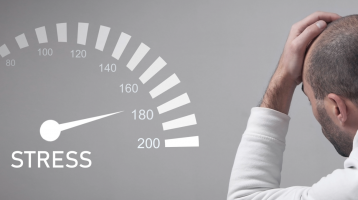
Why are some people able to keep a clear head even in difficult situations, while others lose their balance more quickly? In addition to personal experiences and psychological strategies, everyday habits may also play a role. A study by Binghamton University shows links between diet, exercise, sleep, and the ability to cope with stress. Chronobiology provides additional insights into why a stable daily rhythm might be important for our physical and mental resilience.
Mental Resilience is More than Just a Matter of Willpower
An unexpected problem at work, a missed connecting flight, or a conflict in one’s personal life: stress is a part of life. However, what matters is not only how many stressors a person faces, but also how they deal with them. While some people quickly develop new solutions after an unexpected change, others remain trapped in rumination, frustration, or self-doubt for longer. Such differences can be explained, among other things, by psychological resilience and what is known as psychological flexibility. Resilience refers to the ability to cope with stressful situations, recover from setbacks, and adapt to changing life circumstances. Psychological flexibility describes a related process: people can adapt their thoughts, feelings, and behaviors to a new situation without automatically having to follow their initial impulses.
 This does not mean that flexible people experience less anxiety, anger, or overwhelm. Rather, they may be better able to distinguish between their own emotional experience and the question of what course of action makes sense in the given situation. For example, someone who misses an important deadline may initially feel angry and come under pressure. Psychological flexibility makes it possible to acknowledge these feelings without allowing them to completely control one’s actions. Instead of focusing exclusively on the mistake, the person can consider what options are still available. This ability is not just a matter of personality; physical factors and everyday behavioral patterns may also play a role.
Study Examines Diet, Sleep, and Exercise
A research team at Binghamton University in New York State investigated the connection between lifestyle and psychological resilience. The study was conducted by Lina Begdache, a professor of health and wellness studies, together with Jason Cherry and Alexander J. Talkachov. For the study, the researchers analyzed anonymous questionnaires from approximately 400 students. The data collected included dietary habits, sleep duration, physical activity, and other lifestyle factors. They then examined how these factors were related to psychological flexibility and reported resilience.
The results suggested that students with healthier habits tended to report greater psychological flexibility and higher psychological resilience. The correlations with eating breakfast regularly, getting enough sleep, and engaging in physical activity were particularly striking. Taking fish oil was also associated with greater psychological flexibility. This is consistent with earlier research, which suggests that taking fish oil may mitigate the hormonal response to mental stress. The current study from Binghamton University shows that various lifestyle factors can co-occur with the ability to cope with stress. However, it does not prove that individual habits directly cause greater stress resilience. Since the researchers relied on survey data, cause and effect cannot be clearly distinguished from one another.
Regular Breakfast: A Possible Building Block for Starting the Day
Students who ate breakfast at least five times a week reported, on average, higher resilience. Psychological flexibility played an important role in this relationship. The survey data alone do not provide a conclusive explanation for why breakfast might be linked to psychological resilience. It is conceivable that regular meals are part of a more structured daily routine overall. The intake of energy and nutrients could also be relevant to general well-being.
 However, breakfast should not be viewed as an isolated remedy for stress. The study does not imply that everyone must eat breakfast, nor does it prove that a specific breakfast time increases resilience. What is more interesting is the connection to another field of research: chronobiology. This field examines how biological rhythms regulate the human organism and interact with daily behavioral patterns.
Chronobiology: Why the Right Rhythm Is Important for the Body
The human body follows an internal time schedule. Nearly all organ systems and many cellular processes are subject to temporal fluctuations that vary throughout the day and night. The body’s internal clock plays a central role in this process, organizing the approximately 24-hour circadian rhythm. Among other things, this rhythm influences the sleep-wake cycle, body temperature, metabolism, and the release of certain hormones. Light is a particularly important timing signal: It conveys information to the brain about the transition between day and night and helps synchronize the internal clock with the environment.
But it’s not just light and darkness that matter. Sleep times, physical activity, and meals also serve as temporal cues for the body. Depending on when these cues occur, they may align with or deviate from the internal clock. A largely regular daily routine can help coordinate biological processes over time. Conversely, fluctuating sleep times, nighttime activity, or repeated shifts in the day-night rhythm can make this synchronization more difficult.
This is particularly interesting for stress research. This is because the systems that prepare the body for stress and help it return to a balanced state afterward are also subject to temporal fluctuations. It is important to note the scientific context: The Binghamton University study did not directly investigate whether better synchronization of the internal clock increases psychological flexibility. Rather, chronobiology provides a complementary explanatory framework for why regular sleep and structured daily habits might be important for stress regulation.
The Body Clock and the Stress System Work Together
When people come under pressure, the body reacts not only psychologically but also physiologically. The autonomic nervous system, for example, alters heart rate and circulatory activity. At the same time, hormonal stress regulation is activated, which includes the so-called hypothalamic-pituitary-adrenal axis. This hormonal axis is often referred to as the HPA axis. It is involved in regulating cortisol release and helps the body respond to physical and psychological challenges. The activity of this system changes throughout the day. Cortisol follows a distinct daily rhythm under normal conditions, with its temporal pattern influenced, among other things, by the sleep-wake cycle. However, the response to a specific stressor depends on numerous other factors.
Chronobiological research investigates how the body’s internal clock and the stress system influence one another. Findings from this field of research suggest that persistent disruptions to circadian rhythms can impair the regulation of physiological stress responses. Conversely, stress can also alter sleep and the timing of biological processes.
This creates a complex interplay: Stress can impair sleep, while poor sleep conditions can worsen one’s ability to cope with further stressors. However, it cannot be concluded from this that a regular daily rhythm alone protects against mental health problems. Rather, it can be one component of the physical conditions that support appropriate stress regulation.
Sleep Deprivation Can Impair Adaptability
In the Binghamton study, students who slept less than six hours per night generally reported lower psychological flexibility and lower resilience scores. Sleep is important for numerous processes that also affect emotional experience. These include the processing of experiences, the regulation of attention, and the ability to respond to new demands. Insufficient sleep can impair concentration, decision-making, and emotional control.

From a chronobiological perspective, it is not just the duration of sleep that matters. Its timing and regularity are also relevant. People who go to bed very late during the week, have to get up early, and try to make up for the deficit by sleeping significantly longer on the weekend may repeatedly shift their sleep-wake rhythm.
Such a discrepancy between biological time and a socially prescribed daily routine is often described as circadian misalignment. It can occur, for example, with shift work, frequent changes in work schedules, or highly fluctuating sleep habits. For everyday life, this means that getting enough sleep and maintaining as consistent a sleep schedule as possible are two useful strategies for supporting the physical conditions necessary for concentration and emotional regulation. However, individual sleep needs vary, and not everyone requires exactly the same amount of sleep.
Exercise as a Stimulus for Body and Mind
Physical activity was also associated with greater psychological flexibility in the study. Students who reported at least 20 minutes of sports or comparable physical activity tended to show more favorable scores in adaptability and stress management. Exercise influences numerous physical processes and can support mental well-being. It also offers a way to temporarily shift one’s focus from stressful thoughts to physical sensations and concrete actions.
Chronobiology adds to this aspect by addressing the question of when the activity takes place. Physical exercise can act as an additional timekeeper, although its effect on the body’s internal clock depends on various factors. These include, among other things, an individual’s circadian rhythm, the time of day and intensity of the workout, as well as lighting conditions.
However, this does not yield a universal rule regarding the time of day when exercise most effectively improves psychological resilience. The present study does not provide sufficient data for this. It makes more sense to incorporate exercise regularly into one’s daily routine and to choose a time of day that can be consistently balanced with work, sleep, and personal needs.
Diet, Fish Oil, and Psychological Flexibility
In addition to sleep and exercise, the research team also examined dietary habits. More frequent consumption of fast food was associated with lower levels of psychological flexibility and resilience. In contrast, taking fish oil several times a week was associated with higher psychological flexibility. These observations should be interpreted with caution. The survey does not show whether individual nutrients directly influence psychological flexibility. Nor can it be concluded that fish oil supplements generally improve stress resistance or that people should take such supplements to increase their resilience.
Diet affects the body through many different mechanisms, including energy metabolism and the supply of essential nutrients. At the same time, dietary habits can be an expression of a broader lifestyle. Regular meals, sufficient sleep, and exercise often occur together in daily life and cannot be completely separated from one another in a study of this kind. From a chronobiological perspective, the timing of meals is also an interesting field of research. Meals provide the body with information about when energy is consumed. Metabolic processes are also subject to circadian rhythms, and the synchronization of food intake with the biological clock is being intensively studied. However, the available results do not allow us to determine whether specific mealtimes directly improve psychological flexibility or resilience.
 A key finding of the study concerns the possible role of psychological flexibility as a mediating factor between lifestyle and resilience. The researchers suspect that diet and other habits do not simply and automatically lead to greater resilience. Rather, they may be linked to a greater ability to respond flexibly to stressful situations. This, in turn, could help people cope better with stress. Psychological flexibility does not mean suppressing unpleasant feelings or reinterpreting every situation in a positive light. What matters most is being aware of one’s own reaction and keeping several options open.
A person who initially withdraws after a professional setback is therefore not necessarily less resilient than someone who finds a solution immediately. What matters is whether one succeeds in the long term in processing the situation and responding to it appropriately. This ability can also be practiced in everyday life: by naming one’s own feelings more precisely, questioning hasty conclusions, or consciously seeking alternative courses of action when problems arise. A healthy lifestyle does not replace such psychological processes. However, it could support conditions under which mindfulness, self-regulation, and problem-solving thinking come more easily.
What This Means for Everyday Life
The findings suggest that dealing with stress should not be viewed exclusively as a mental task. Everyday circumstances also deserve attention. That said, not all habits need to be changed at once.
- Stabilize sleep: Consistent bedtimes and wake-up times help support a regular sleep-wake cycle.
- Take advantage of daylight: Natural light during the day is an important cue for the body’s internal clock. Regular time spent outdoors can help stabilize the day-night rhythm.
- Structure meals: Regular mealtimes can promote a reliable daily routine. Breakfast can be part of this, but it may not be equally suitable for everyone.
- Incorporate exercise: Regular physical activity can also be integrated into daily life through walks or short exercise sessions.
- Be mindful of your emotions: If you notice stress, try to identify the feeling and distinguish between your immediate reaction and a possible solution.
- Take stress seriously: Chronic stress, persistent sleep problems, and mental health issues should not be addressed solely through lifestyle changes. In cases of persistent stress, professional support may be helpful.

From a chronobiological perspective, regularity is particularly important. Not every single meal or exercise session needs to be perfectly planned. Rather, what may be crucial is creating recurring time patterns that fit into one’s individual daily routine.
What the Study Cannot Yet Answer
The Binghamton University study provides evidence of connections between lifestyle, psychological flexibility, and resilience. However, it has limitations. The participants were college students. The results therefore cannot be readily generalized to all age groups or to people with different living and working conditions. Furthermore, the data are based on self-reports. They reflect the respondents’ perceptions and cannot be equated with objective measurements of sleep, physical activity, or stress hormones.
Since the study does not allow for causal conclusions, the direction of the correlations also remains unclear. Healthier habits could lay the groundwork for better stress management. At the same time, people with greater psychological resilience may be better able to maintain regular, health-promoting routines. The chronobiological perspective must also be considered separately: The study did not record detailed circadian phases, individual internal clocks, or daily hormonal profiles. There is therefore no direct evidence that the synchronization of the internal clock confers psychological flexibility.
Future studies could therefore objectively measure sleep duration and timing, take individual chronotypes into account, and incorporate biological markers of stress regulation. Longitudinal studies or controlled interventions could also clarify whether changes in daily structure actually contribute to better stress management.
Resilience Arises from the Interplay of Factors
The ability to cope with difficult situations cannot be reduced to a single habit. The Binghamton University study shows that regular breakfast, exercise, sleep, and other lifestyle factors may be associated with psychological flexibility and resilience. Chronobiology expands this perspective with an important insight: the human organism does not function independently of the time of day. Sleep, metabolism, and hormonal stress regulation follow biological rhythms, the synchronization of which is crucial for physical adaptability.
A stable daily routine is therefore no guarantee of serenity. However, it can create a framework that supports rest, attention, and the regulation of emotions. Ultimately, psychological resilience does not mean never losing one’s balance. Rather, it is demonstrated by regaining the capacity to act after experiencing stress. In addition to psychological strategies, sleep, exercise, nutrition, and a daily rhythm that is as well-balanced as possible could also help support this ability in everyday life.