Certain nerve cells appear to control how much our need for sleep increases with every hour we stay awake. Swiss researchers have investigated these previously poorly understood neural circuits. In mice, selectively inhibiting these circuits led to a nearly 70 percent decrease in non-REM sleep. The results offer new insights into the biological regulation of sleep and wakefulness.
Why the Need for Sleep Increases with Every Hour
Anyone who has pulled an all-nighter knows the feeling: at first, the fatigue can still be pushed aside. But eventually, the eyes grow heavy, concentration wanes, and the urge to sleep grows stronger and stronger. Why our brain eventually craves sleep has puzzled scientists for many years. Researchers at the University of Basel have now identified specific groups of nerve cells that appear to play a key role in the development of this urge to sleep. Their experiments show that the need for sleep can be significantly influenced by selectively activating or inhibiting these cells.
 Our sleep is regulated by two biological systems. The first is the internal clock, which roughly aligns our sleep-wake cycle with the 24-hour day. Light and darkness play a crucial role in this process. The second system is what’s known as homeostatic sleep pressure. It increases the longer we stay awake. After a sleepless night, it is particularly high. The body then attempts to compensate for the sleep loss through longer and more intense sleep. Both systems work together but fulfill different functions. While the internal clock influences when we sleep, sleep pressure determines how urgently our body needs rest.
Two Groups of Neurons Become Active During Prolonged Wakefulness
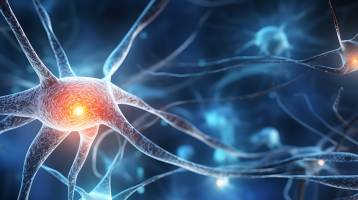
The research team first investigated which areas of the brain respond to prolonged periods of wakefulness. In doing so, the scientists focused on two regions: the medial preoptic area of the hypothalamus and the median raphe nucleus in the brainstem. There, they found neurons whose activity increased during prolonged periods of wakefulness and decreased again during sleep. This suggested that these cells not only register how long an animal has been awake but may also be actively involved in building up the need for sleep.
To test their hypothesis, the researchers selectively stimulated the identified neurons. The result was clear: the mice subsequently slept longer. In particular, so-called non-REM sleep increased. This is the sleep phase characterized, among other things, by slow brain waves. Measurements of electrical brain activity also showed increased delta activity. This is considered an important indicator of the intensity of deep sleep and typically increases after prolonged periods of wakefulness. The artificial activation of the nerve cells thus led to a sleep pattern resembling the natural restorative sleep that follows sleep deprivation.
Nearly 70 Percent Less Sleep Through Targeted Inhibition
Even more surprising were the results of the next experiment. The scientists inhibited specific neurons in the median raphe nucleus. In doing so, they examined two cell types that use different neurotransmitters: GABA and serotonin. When both cell groups were inhibited together, the mice spent nearly 70 percent less time in non-REM sleep than the control animals. At the same time, their wake periods became longer. The typical increase in sleep pressure was also largely absent. Delta activity, which normally increases after prolonged wakefulness, was significantly lower.
The researchers thus found strong evidence that these neurons not only induce sleep but also play a role in the development of the need for sleep. However, the sustained inhibition was not without consequences: the experiment proved fatal for about 17 percent of the affected animals. The results therefore in no way suggest that consistently getting less sleep is healthy or harmless.
GABA and Serotonin Work Together to Induce Sleepiness
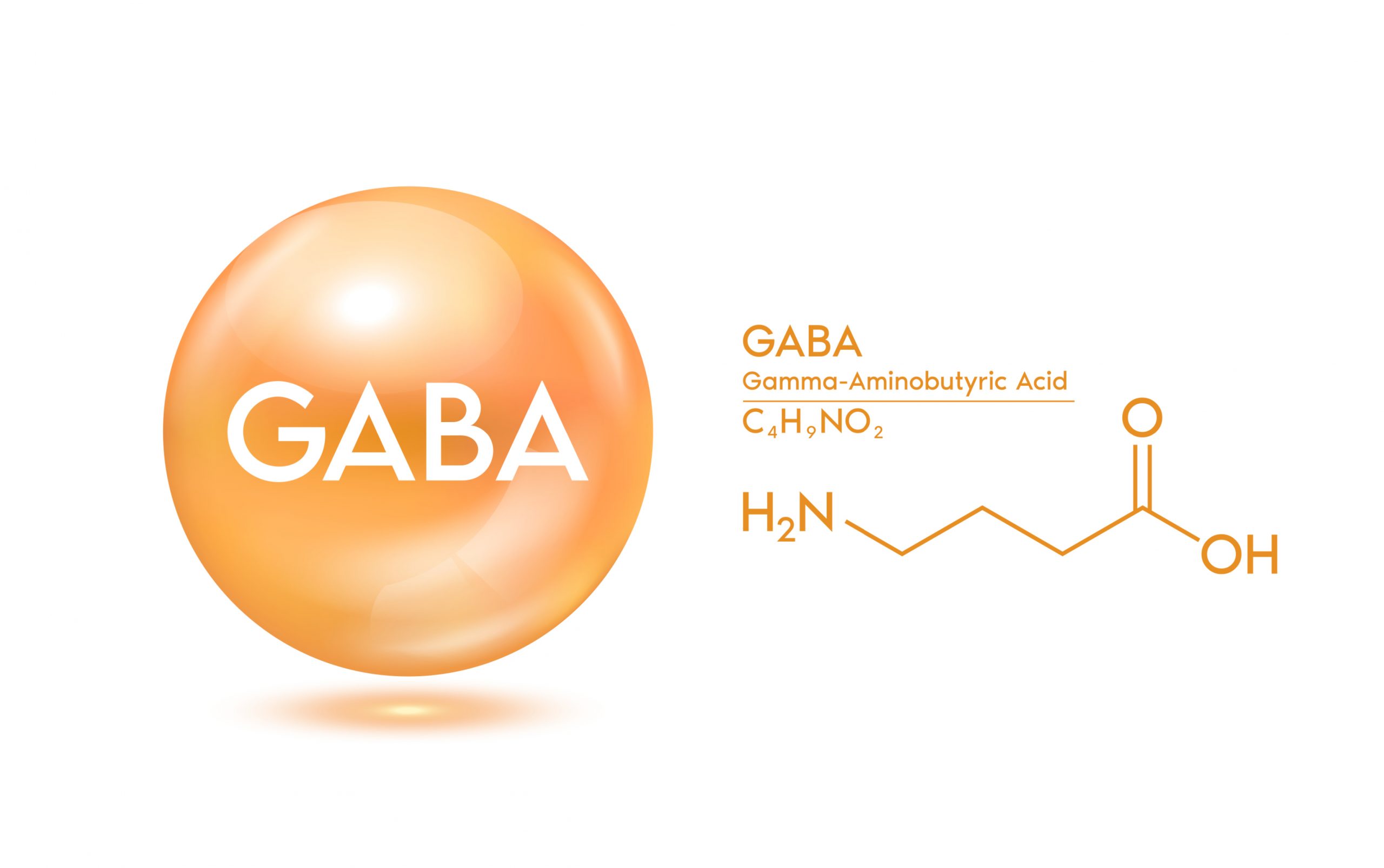
Both groups of neurons use different neurotransmitters that perform various tasks in the brain but appear to complement each other in regulating sleep. GABA (gamma-aminobutyric acid) is the central nervous system’s most important inhibitory neurotransmitter. It ensures that neuronal activity is slowed down and regulated. GABA therefore also plays an important role in relaxing the nervous system and in controlling sleep and wakefulness. Serotonin, on the other hand, is involved in numerous processes. Among other things, it influences mood, emotional processing, and various functions of the sleep-wake system. Its effect on sleep is complex and depends heavily on which receptors and groups of neurons are involved.
 The experiments conducted by the Basel researchers showed that the two groups of cells together exert a particularly strong sleep-promoting effect. When they were specifically activated, non-REM sleep increased. When both were inhibited, however, sleep duration decreased significantly, and the normal build-up of sleep pressure was attenuated. It is noteworthy that it is not simply a matter of two individual neurotransmitters being involved. Rather, the interaction among the nerve cells that use these signaling molecules appears to be crucial. Together, they form a neural circuit that influences how strongly the brain reacts to prolonged periods of wakefulness. The results thus underscore how finely tuned sleep regulation is in the brain. Sleep does not arise from a single switch, but rather from the interaction of various nerve cells, neurotransmitters, and brain regions.
A study published in Current Biology in 2026 also underscores the importance of GABA-producing neurons for sleep regulation. Researchers found in mice that certain GABA cells in the brainstem alter their activity following sleep deprivation and promote the subsequent restorative sleep. Changes in AMPA receptors, which influence the excitability of neurons, also played a role in this process. The results show that GABAergic neurons in different parts of the brain play important roles in processing sleep deprivation.
Sleep Drive and the Internal Clock are Not the Same Thing
For chronobiology, one key distinction is crucial: The neurons studied primarily regulate what is known as homeostatic sleep drive. However, they should not be equated with the human internal clock. Both systems work closely together but fulfill different functions. The central internal clock is located in the suprachiasmatic nucleus (SCN), a small cluster of neurons in the hypothalamus. It is primarily guided by the natural light-dark cycle and ensures that numerous biological processes follow an approximately 24-hour rhythm. These include, among other things, hormone secretion, body temperature, metabolism, and the sleep-wake cycle.
 Light plays a particularly important role here. It reaches the brain via special light-sensitive cells in the retina and helps resynchronize the internal clock with the outside world every day. If this rhythm is disrupted—for example, by shift work, frequently changing sleep times, or bright evening light—the internal clock can become unbalanced. Sleep pressure, on the other hand, works according to a different principle. It increases regardless of the time of day, the longer we stay awake. Even if the internal clock is currently sending a wake-up signal, the need for sleep can become so strong after many hours without rest that we can barely stay awake. The neurotransmitter adenosine likely plays an important role in this process as well. It accumulates in the brain during wakefulness and contributes to our increasing tiredness. Caffeine can temporarily counteract this effect by blocking certain adenosine receptors. However, this does not eliminate the actual need for sleep.
The two systems influence each other: The internal clock helps determine when sleep is biologically most likely to occur, while sleep pressure ensures that the need for rest grows stronger as the time spent awake increases. This is precisely why sleep problems can have various causes. Anyone who cannot fall asleep in the evening despite feeling very tired may have a shifted circadian rhythm. In contrast, those who can barely keep their eyes open after a long period of wakefulness are primarily experiencing increasing homeostatic sleep pressure. The new findings from Basel now provide further clues as to which groups of neurons are involved in this second mechanism. They thus help us better understand two closely related but biologically distinct processes of sleep regulation.
What the Discovery Means for Sleep Research
The findings from the University of Basel are, for now, basic research conducted on mice. They therefore cannot be directly applied to humans. Nevertheless, in the long term, they could help us better understand the biological causes of certain sleep disorders. An interesting question is whether the groups of neurons studied function differently in people with chronic sleep problems. It is conceivable, for example, that disruptions in these neural circuits contribute to the inability of the sleep drive to build up normally or impair the transition between wakefulness and sleep. The findings could also be important for research into chronic sleep deprivation. People who consistently get too little sleep often experience changes in concentration, memory, reaction time, and emotional resilience. It is not yet fully understood which neural mechanisms are responsible for this or why some people are particularly sensitive to sleep deprivation.
The new findings provide a possible starting point: If certain neurons actively help regulate the urge to sleep, changes in their activity could also influence how strongly the brain reacts to prolonged periods of wakefulness. The researchers now intend to investigate in greater detail how the identified nerve cells communicate with other brain regions and which molecular processes regulate their activity. It will also be interesting to see how these circuits interact with other known sleep systems. In the long term, such findings could provide new avenues for treating certain sleep disorders. However, further research is needed before these findings can be translated into concrete therapies. Above all, it must first be determined whether the mechanisms observed in mice can also be demonstrated in humans in a comparable manner.
The study demonstrates just how complex the regulation of our sleep is. In addition to the internal clock and the well-known sleep-wake mechanisms, there are apparently specific groups of neurons that actively contribute to the increasing pressure to sleep. This reveals yet another aspect of a biological system that is of fundamental importance to our health. Sleep is not a passive state into which the body simply falls at some point. The brain actively regulates when rest is necessary and how strong the need for it is. The new findings from Basel could help us understand these processes even better in the future.
You may also be interested in...
-

Scientific evidence of the relationship between deep sleep and brain health has been rapidly increasing…
-
Sleep deprivation has gotten a lot of attention from health officials and researchers in recent…