Sleep problems can cause far more than just fatigue and difficulty concentrating. An analysis of 57 imaging studies shows that various sleep disorders are linked to structural changes in the brain. Among the regions affected are those responsible for attention and emotional regulation.
Sleep Problems May Affect the Brain More Significantly than Previously Thought
Sleep is far more than just a phase of physical recovery. During the night, the brain processes information, regulates numerous biological processes, and helps consolidate memories. Chronic sleep disruption can therefore have far-reaching consequences for cognitive performance and emotional balance. A new study by researchers at Florida International University now provides further evidence of how closely sleep disorders and brain structure may be linked. To this end, the researchers analyzed a total of 57 imaging studies in which the brains of adults had been examined.
 In the process, they discovered changes in several brain regions that are important for attention, motivation, decision-making, and the regulation of emotions. Particularly striking were the similarities between different types of sleep disorders. At the same time, changes were also observed that appear to be more closely associated with specific types of disorders. The findings could help us better understand why people with chronic sleep problems often not only suffer from daytime sleepiness but also develop difficulties with concentration, responsiveness, and emotional resilience.
57 Studies Provide New Insights into Changes in the Brain
For their study, the scientists conducted a so-called neuroimaging meta-analysis. This involves combining the results of various imaging studies and statistically analyzing them to identify recurring patterns. The focus was on two major groups of sleep disorders.
The first group consists of so-called dyssomnias. These include, for example, insomnia and sleep apnea. These conditions interfere with falling asleep, staying asleep, or the quality of nighttime rest. The second group comprises so-called parasomnias. These include, among others, sleepwalking, recurring nightmares, and night terrors. In these disorders, unusual behaviors or experiences occur during sleep that can disrupt the normal sleep cycle.
By comparing both groups, the researchers sought to determine whether different sleep disorders cause similar changes in the brain or whether specific brain regions are affected differently in each case. A remarkable pattern emerged: Despite the different symptoms and causes, both groups showed changes in a common brain region—the thalamus.
Thalamus: A Central Hub for Attention and Thinking
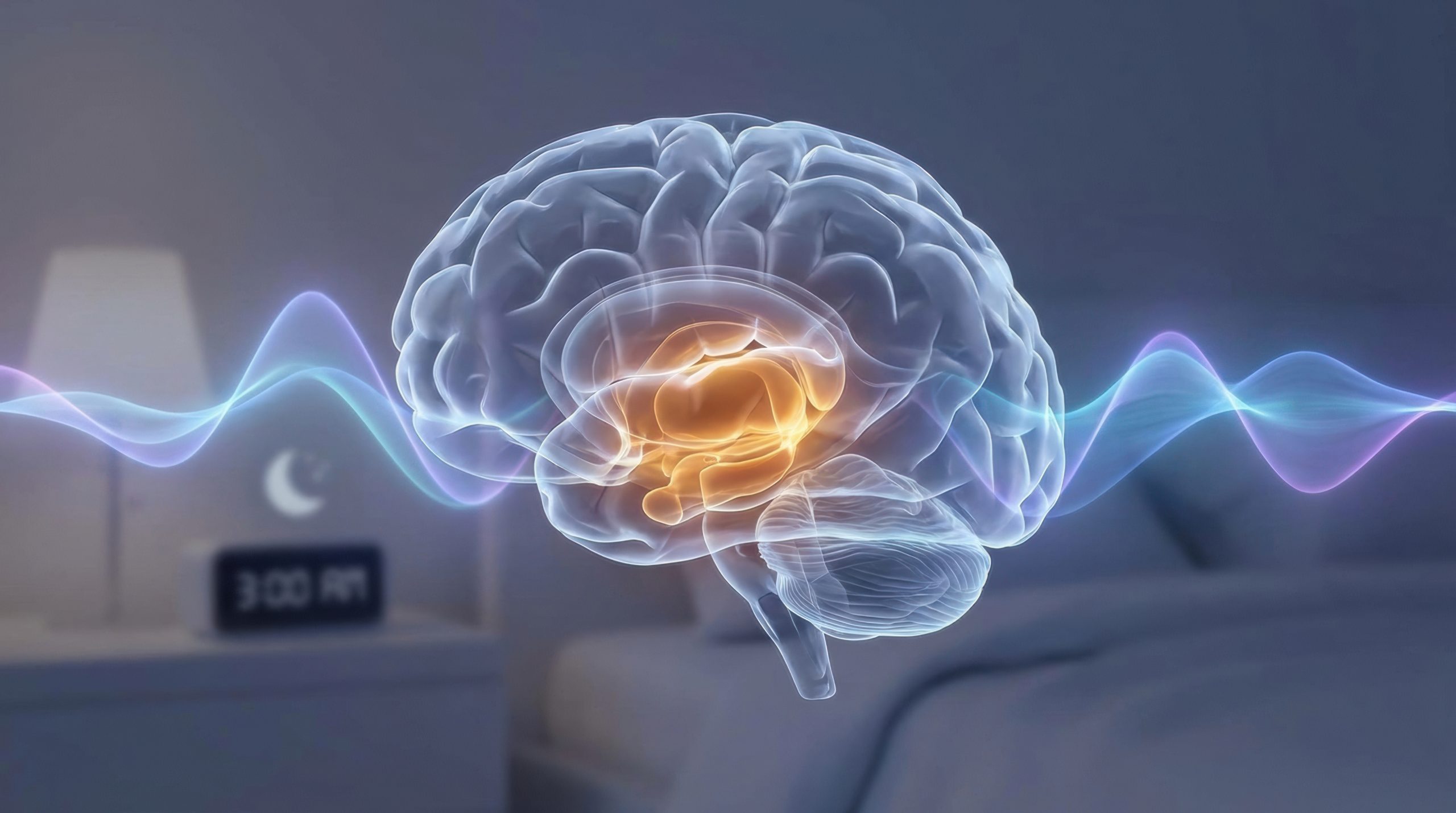
The thalamus is located deep within the brain and plays a crucial mediating role. It processes and relays a vast amount of information to other brain regions. This includes, among other things, sensory stimuli required for perception and attention. Furthermore, the thalamus is involved in more complex cognitive processes. It supports concentration, helps distinguish important information from irrelevant stimuli, and contributes to the control of attention.
In both groups of sleep disorders studied, the scientists found evidence of structural changes or reductions in specific areas of the thalamus. Particularly notable was the so-called pulvinar. This region plays a key role in directing attention specifically toward relevant information. It also supports cognitive control—that is, the ability to consciously direct thoughts and actions.
Changes in this area could explain why people with sleep disorders more frequently have difficulty concentrating for extended periods, making decisions, or reacting quickly to external stimuli. This could also lead to an increased tendency to make mistakes in everyday life. For example, people who suffer from chronic sleep problems may notice that their mental performance declines and that even simple tasks require more attention.
Sleepwalking and Nightmares Show Additional Abnormalities
In addition to the common changes in the thalamus, the researchers discovered further differences among the sleep disorders studied. The findings regarding parasomnias were particularly interesting. In people who sleepwalk, experience recurrent nightmares, or have night terrors, additional structural abnormalities were found in the posterior cingulate cortex. This brain region is part of a network involved in, among other things, motivation, decision-making, and the processing of emotional information.
 The posterior cingulate cortex also plays a role in linking different types of information and in evaluating internal and external stimuli. Changes in this area could therefore be linked to difficulties with emotional regulation and certain behavioral processes. The results suggest that parasomnias may not only affect the sleep cycle but are also associated with changes in brain networks that are important for emotional experience and behavioral control. Interestingly, the researchers found no comparable, consistent pattern of additional structural changes in dyssomnias, which include insomnia and sleep apnea.
Why Disturbed Sleep Can Also Impair Mental Performance
The findings provide a possible explanation for why sleep disorders are often associated with problems in daily life. Restful sleep is important for numerous brain functions. These include memory processing, attention, emotional stability, and the ability to process complex information. People who consistently sleep poorly may therefore not only be physically exhausted; their mental performance can also suffer. Problems with concentration, slowed reactions, difficulty making decisions, and increased emotional irritability are among the commonly reported consequences.
The new findings suggest that structural differences in certain brain regions may also play a role in this. This is particularly interesting for chronobiology: sleep and internal biological rhythms influence numerous processes in the brain. A regular sleep-wake cycle supports the temporal coordination of these processes. Sleep disorders can disrupt this organization and affect various physical and mental functions. However, the current meta-analysis did not specifically examine the internal clock or a shift in the circadian rhythm. Rather, it provides evidence that various sleep disorders are associated with changes in brain regions required for important cognitive and emotional functions.
Do Sleep Disorders Change the Brain – Or is it the Other Way Around?
Despite the interesting findings, one crucial question remains unanswered: Are the observed changes actually caused by the sleep disorders, or could pre-existing characteristics of brain structure increase the risk of certain sleep problems? The study cannot answer this question. Since the researchers pooled results from previously published imaging studies, no clear cause-and-effect relationship can be inferred from the observed associations.
 It is therefore possible that chronic sleep problems contribute to certain changes. Similarly, differences in brain structure may have existed even before the onset of the sleep disorder. An interaction between both factors is also conceivable. The research team at Florida International University therefore intends to conduct further studies. These will examine individual parasomnias in greater detail. Particular interest is focused on sleepwalking and REM sleep behavior disorder.
New Approaches for More Targeted Treatment of Sleep Disorders
In the long term, the findings could also prove valuable for the development of more personalized treatment options. To date, many therapeutic approaches have focused primarily on improving sleep quality, reducing nighttime disruptions, or stabilizing the sleep-wake cycle. If it becomes possible in the future to identify more precisely which brain regions are particularly affected by specific sleep disorders, treatments could potentially be tailored more effectively to the respective biological and neurological changes.
For example, it might be possible not only to treat the nighttime sleep problems themselves but also to take greater account of the associated impairments in attention, decision-making, and emotional regulation. Until then, however, further research is needed. The current study provides important insights into the connections between sleep disorders and brain structure, but does not yet prove that the sleep problems themselves cause the observed changes.
You may also be interested in...
-

Scientific evidence of the relationship between deep sleep and brain health has been rapidly increasing…
-
Although your brain may seem to shut off when you sleep, research has found that…