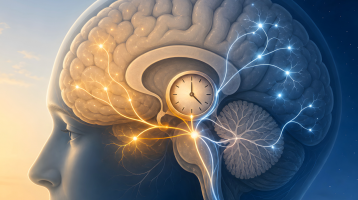
Why are some people full of energy first thing in the morning, while others don’t really come into their own until the evening? The answer lies, in part, in our internal clock. It influences when we get tired, when we wake up, when our body temperature rises, and at what times of day we are at our most productive.
People differ significantly from one another in this regard. Some tend to be so-called “early chronotypes,” while others are “late chronotypes.” In between lies the large group of so-called “intermediate chronotypes.” But an interesting question remains: Is our chronotype fixed—or can we change it? The short answer is: To a certain extent, yes. But not at will.
What Exactly is a Chronotype?
The chronotype describes a person’s individual temporal orientation. An early chronotype typically gets tired relatively early in the morning and tends to wake up early even without an alarm clock. A late chronotype, on the other hand, gets tired later in the evening and likes to sleep in in the morning.
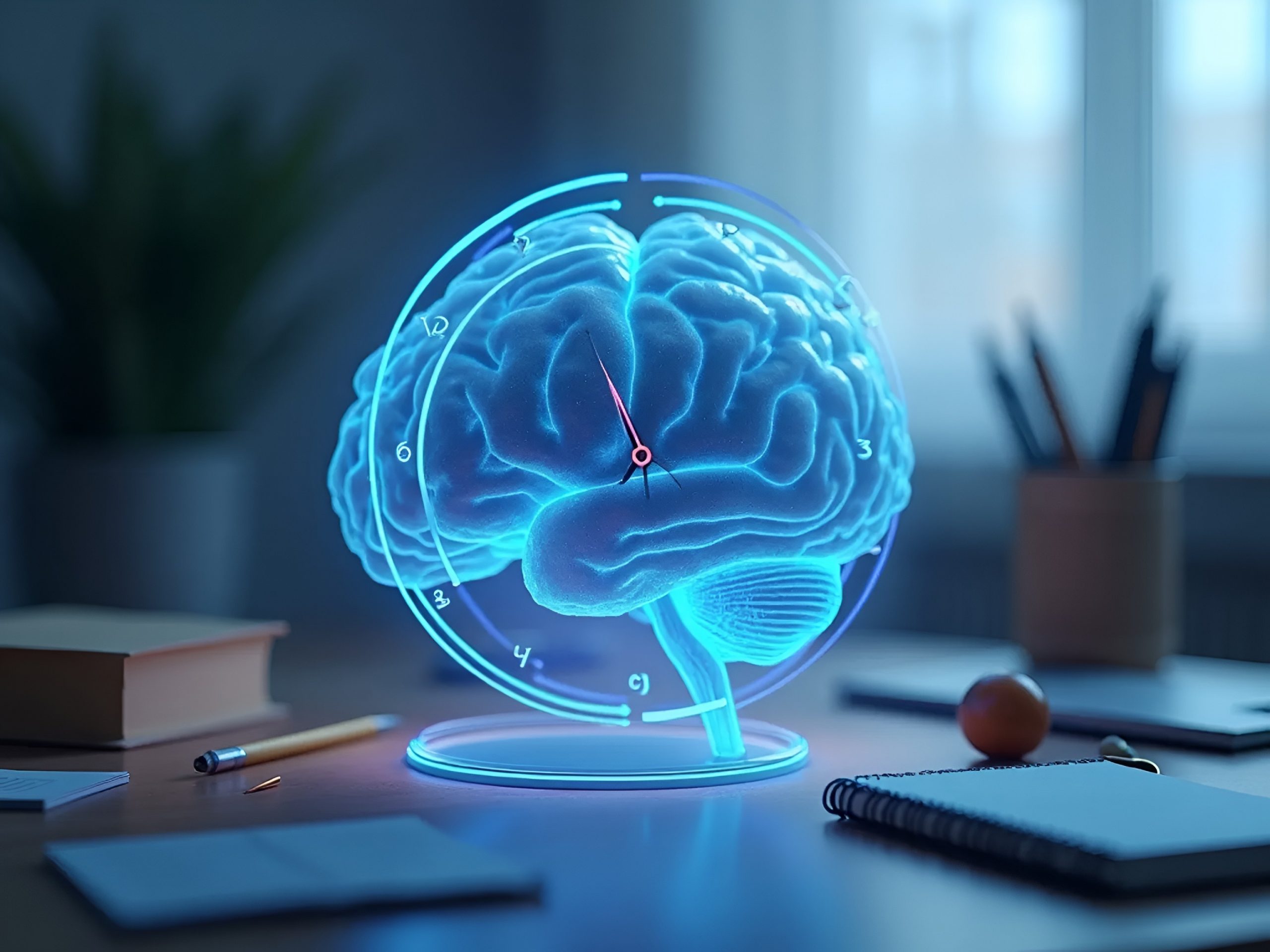
This isn’t simply a matter of personal preference. The chronotype is related to the biological organization of the circadian clock. This internal clock regulates numerous processes in the body according to an approximately 24-hour rhythm.
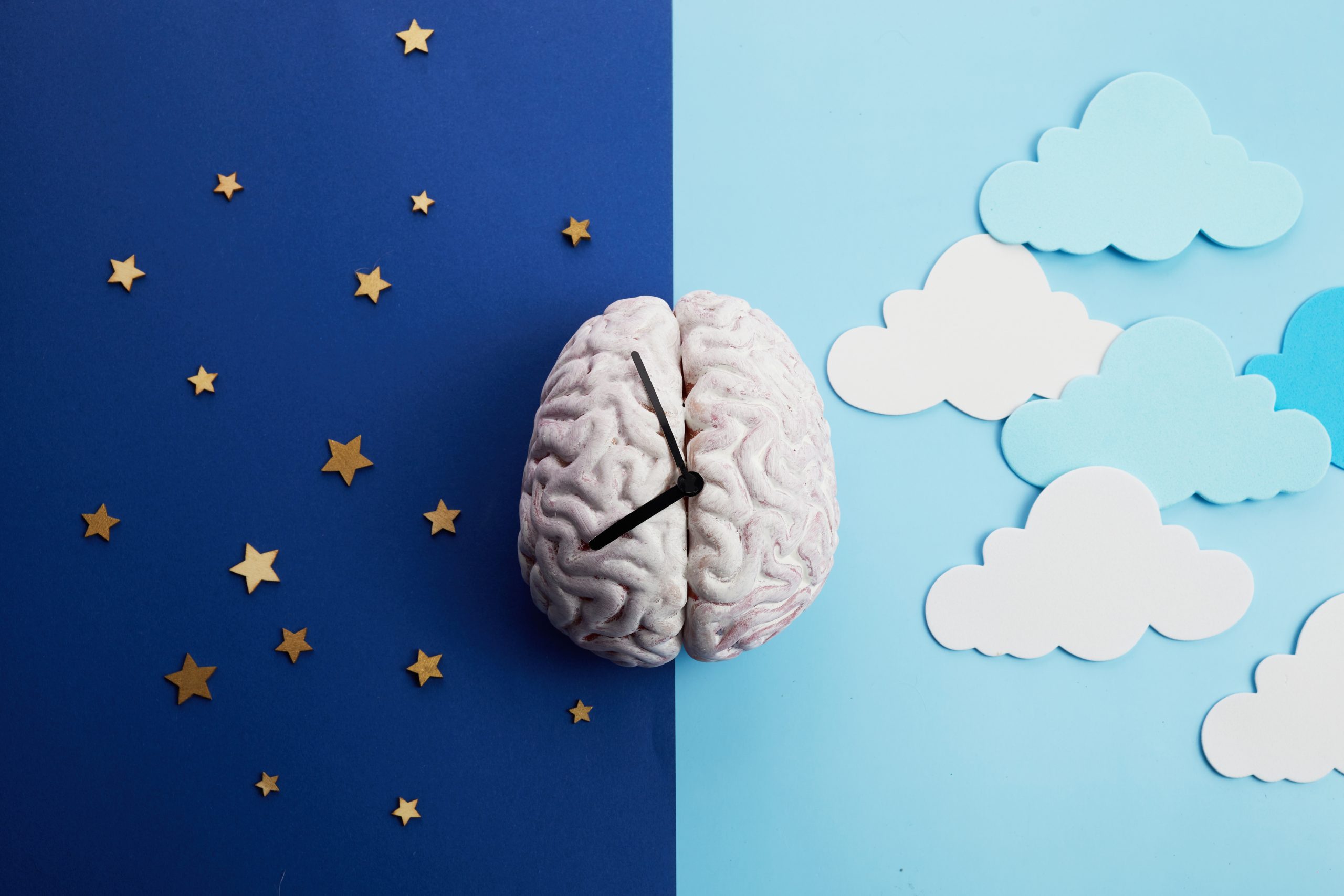
These include, among other things:
- Sleep and wakefulness
- Body temperature
- Hormonal rhythms
- Metabolism
- Attention
- Performance
- Fatigue
Put simply, the chronotype describes the times when our biological clock is preferentially set to “active” or “rest.”
Chronotype is Not Just a Matter of Personality
“I’m just not a morning person” may sound at first like a personality trait. In reality, however, there is a complex interplay of various factors behind it. Genetic differences, for example, influence the function of our circadian clock. Age also plays a major role. Children often have a relatively early rhythm, while the rhythm can shift significantly later during puberty.
In adulthood, the chronotype usually stabilizes somewhat again. In later life, it shifts back toward earlier times for many people. The chronotype is therefore neither entirely genetically determined nor completely freely chosen. It changes over the course of a lifetime.
To What Extent Can Chronotype be Changed?
Our circadian clock has a remarkable property: it can adapt to the environment. This is facilitated by so-called timing signals. The most important timing signal for humans is light. Morning light can signal to the internal clock that the biological day has begun. Evening light, on the other hand, can shift the internal clock’s timing backward. This is precisely where one of the most important ways to influence one’s own rhythm lies.
Those who regularly expose their internal clock to a strong light signal in the morning and reduce light exposure in the evening can generally shift their sleep-wake rhythm earlier. Conversely, strong light exposure in the evening can contribute to a later biological rhythm. However, this does not mean that you can completely change your chronotype within a few days.
Caution is advised when it comes to simplistic promises. A pronounced late chronotype will not suddenly become a committed early riser just because of a few early alarm clocks. While it is possible to influence sleep times and the timing of the internal clock, the individual’s biological predisposition remains unchanged.
You could compare it to height: The environment can influence how we cope with our physical makeup—but it cannot arbitrarily transform one biological starting point into another. The same applies to chronotype. We can shift our rhythm, but we cannot program it entirely at will.
The Most Powerful Tool: Light
If you want to shift your rhythm forward, you should pay particular attention to the timing of light exposure. Bright light in the morning is especially important. Spending time outdoors after waking up can send a strong signal to your internal clock that the day has begun. It’s not just the brightness that matters, but also the timing. In the evening, the situation is reversed.
 Very bright light in the hours before bedtime can signal to the body that the biological day is not yet over. That’s why a combination can be helpful: more light in the morning—less light in the evening. This doesn’t mean completely avoiding all light sources in the evening. Rather, the distinction between day and night should remain as clear as possible.
Consistency is More Important than a Single Early Morning
If you want to influence your chronotype, you shouldn’t just focus on the time you wake up. The body’s internal clock responds to consistent signals. If someone wakes up at 6 a.m. on Mondays, at 7 a.m. from Tuesday through Thursday, at 6 a.m. on Fridays, and sleeps in until 11 a.m. on the weekends, the circadian system receives very inconsistent information.
A regular rhythm is therefore often more beneficial than occasional extreme changes. This also applies to bedtime. The body benefits when waking up, exposure to light, meals, and activity occur in a reasonably predictable manner.
Can a Night Owl be Turned into an Early Riser?
To a certain extent. Anyone who regularly falls asleep very late and has a hard time getting up in the morning can try to gradually shift their entire daily rhythm forward. Instead of, for example, moving bedtime forward by two hours all at once, a smaller shift may be more realistic. It’s important not just to go to bed earlier.
If you go to bed at 9 p.m. even though your body isn’t yet ready for sleep, you may simply lie awake longer. It’s better to shift your entire rhythm:
- get up earlier in the morning
- get as much daylight as possible in the morning
- stay active during the day
- reduce light intensity in the evening
- maintain as regular a sleep schedule as possible
Over time, your body’s natural readiness for sleep can shift accordingly.
Why an Alarm Clock Alone Doesn’t Work
A common mistake is simply changing the wake-up time. A typical example: Someone who normally gets up at 8:30 a.m. suddenly wants to get up at 5:30 a.m. The alarm clock is set earlier accordingly—but the person still goes to sleep around midnight or later. The result, at first, is primarily a lack of sleep.
While the alarm clock changes the time of waking up, it does not automatically adjust the biological clock. For a lasting change, the relevant timing cues must also shift. This is an important difference between behavioral adaptation and circadian adaptation.
Meal Times Can also Play a Role
Light is the most important timing signal, but not the only one. The timing of meals can also influence the body’s biological clocks. What’s particularly interesting is that not all organs receive exactly the same timing signals. The brain is strongly guided by the light-dark cycle. Peripheral clocks in organs and tissues also respond to factors such as food intake and activity.
 Regular meals can therefore also help stabilize temporal structures in daily life. However, this does not mean that a specific mealtime can simply change a person’s chronotype. The influence is more complex.
Exercise as Another Timing Cue
Physical activity is also linked to the circadian system. Regular exercise supports a structured daily routine and can—depending on the time of day and individual circumstances—also influence the body’s temporal organization.
For people who want to stabilize their rhythm, a regular alternation between activity and rest is therefore beneficial. Regularity is particularly important here. The internal clock does not respond to individual events but recognizes recurring patterns.
Chronotype Changes With Age Anyway
One of the most interesting findings in chronobiology is that our chronotype does not remain the same throughout our entire lives. Children are often early-riser types. During puberty, the sleep-wake rhythm shifts significantly later for many adolescents. Teenagers get tired later and, biologically speaking, would often get up later as well.
In adulthood, this tendency changes again. Later in life, the rhythm shifts back to an earlier time for many people. So, a person’s chronotype isn’t influenced solely by their lifestyle; the chronotype itself changes over the course of a lifetime.
Why We Can’t Simply “Train” Our Chronotype Away
Sometimes it seems as though anyone can become an early riser with enough discipline. Scientifically speaking, that’s too simplistic. If a person is biologically strongly oriented toward late hours, they can certainly get used to an earlier social schedule. However, that does not necessarily mean that their internal clock will fully adapt.
They may still experience greater alertness in the evening and have more difficulty in the morning. This also explains why two people with identical work hours can have completely different experiences. For one person, the productive day begins at 7 a.m. For another, it may not begin until several hours later.
Chronotype and Social Time Don’t Always Align
Our daily lives are highly standardized. School starts in the morning. Many jobs require an early start. Public transportation, appointments, and social obligations are also based on fixed times. However, not everyone’s biological clock can be synchronized with this schedule.
 People with a pronounced late chronotype, in particular, may find themselves constantly caught between biological time and social time. This disconnect is often referred to as “social jet lag.” It can manifest, for example, when someone has to get up early during the week but sleeps significantly longer on the weekend. The weekend is then sometimes used to catch up on one’s own biological rhythm.
Do You Even Need to Change Your Chronotype?
That is perhaps the most important question. Not every night owl needs to become an early riser. If someone goes to bed late, wakes up late, and still gets enough sleep, feels productive during the day, and manages their daily life well as a result, there isn’t automatically a problem. It becomes particularly difficult when one’s natural rhythm is consistently out of sync with the demands of daily life.
In that case, it can make sense to adapt your internal clock as well as possible to your personal obligations. The goal shouldn’t be, “I have to become a morning person,” but rather, “How can I best align my daily routine with my biological clock?”
If you want to shift your rhythm forward, you shouldn’t try to create a completely new chronotype overnight. A gradual adjustment makes more sense. One possible approach is to gradually move up your wake-up time while making the most of natural light in the morning. In the evening, however, light intensity should be reduced to facilitate a smooth transition into the rest phase.
It’s crucial to consistently maintain these changes over an extended period. The internal clock needs recurring signals. A single early morning makes little difference. Many days with a similar structure, on the other hand, can have a significantly greater effect.
Conclusion: The Chronotype is Flexible – But Not Arbitrary
Can you change your chronotype? Yes, to a certain extent. The internal clock is not a rigid system. Light, sleep times, activity, meals, and other environmental factors can influence the timing of our biological rhythms. At the same time, there are individual differences that do not simply disappear through discipline.
That’s why the more sensible approach isn’t to completely “reprogram” your own chronotype. Rather, it’s about understanding your existing biological tendency and shaping your environment in a way that supports the desired adjustment in timing. A pronounced evening type will probably never function exactly like a pronounced morning type. But they can certainly influence their rhythm.
And sometimes the best solution isn’t to change your internal clock—but to adapt your daily routine a little better to it. After all, chronobiology doesn’t mean fighting against your internal clock. It means understanding how it works.
You may also be interested in...
-

Decisions are a part of life. We all make them -- large and small, good…
-
Keeping a healthy sleep-wake cycle is essential to our well-being. However, it can be difficult…
-
Current science notes important connections between sleep quality, the circadian rhythm and COVID-19 and other…