New research suggests that not only the quality of our diet, but possibly also the regularity of our meals, is linked to our mental health. According to the findings, people who eat breakfast, lunch, and dinner at particularly irregular times are more likely to report symptoms of depression than those with a consistent eating schedule. The findings thus provide further evidence that daily eating habits and mental health may be more closely linked than has long been assumed.
It’s Not Just What We Eat, But also When We Eat
For many people, skipping meals is part of everyday life. In the morning, there isn’t enough time for breakfast; during a hectic workday, lunch is postponed or forgotten entirely; and in the evening, a quick bite is eaten. In between meals, coffee, granola bars, candy, or other snacks ensure that hunger disappears—at least temporarily. What initially appears to be a harmless or unavoidable habit, however, could have implications beyond simply how hungry we feel.
 Our brain relies on a continuous supply of energy. Although it accounts for only a comparatively small portion of our body weight, it requires a significant share of our daily energy intake. Glucose and other nutrients play a key role in the function of nerve cells and in numerous processes that influence, among other things, concentration, sleep, stress regulation, and mood. It therefore stands to reason that the question of when and how regularly we eat could also play a role in our well-being.
When discussing nutrition and mental health, the focus is often on what foods are on our plates. A balanced diet consisting of vegetables, fruits, whole grains, protein sources, and high-quality fats is considered an important foundation for physical health. There is also evidence suggesting that a nutrient-rich and varied diet can be important for mental health.
The timing of meals, on the other hand, is discussed much less frequently. Yet our bodies follow a complex biological rhythm. Numerous physical processes change throughout the day and night. These include, among other things, the sleep-wake cycle, the release of certain hormones, metabolism, and the regulation of blood sugar levels. Irregular eating habits could influence these processes. A pattern in which very little is eaten during the day and a large portion of daily calories is consumed only late in the evening could be particularly problematic. Such a rhythm can affect not only metabolism but also, potentially, sleep. And sleep, metabolism, and mental health, in turn, are closely interconnected.
What the New Study Examined
A study recently published in the Journal of Affective Disorders examined precisely this connection. The researchers sought to determine whether there is a statistical association between the regularity of meals and depressive symptoms. To do so, they analyzed data from more than 21,000 adults who had participated in the Korea National Health and Nutrition Examination Survey (KNHANES) between 2014 and 2022. The large sample size enabled the researchers to compare different dietary and lifestyle habits.
The focus was not exclusively on what the participants ate. Rather, the key factor was how regularly they ate their main meals. The researchers looked specifically at the regularity of breakfast, lunch, and dinner and then correlated this information with the reported depressive symptoms.
To assess depressive symptoms, the researchers used the PHQ-9. This is a well-established nine-item questionnaire frequently used in medical research to assess the presence and severity of depressive symptoms.
In addition, the researchers took various other factors into account. These included age, gender, body weight, smoking, alcohol consumption, dietary variety, and the habit of skipping breakfast. These adjustments are important because depression and eating habits can be influenced by numerous different lifestyle and health factors.
A Striking Association
The results were remarkable: Individuals with particularly irregular mealtimes reported depressive symptoms significantly more often than people whose meals were more evenly spaced throughout the day. After analyzing the data, those with the most irregular eating habits were about 55 percent more likely to report depressive symptoms than participants with the most regular mealtimes.
 However, this does not mean that irregular eating automatically causes depression. Such a conclusion cannot be drawn from the study. The study primarily shows a correlation between two factors: the regularity of eating and the occurrence or frequency of depressive symptoms.
Nevertheless, the finding is interesting because it fits into a broader line of research. Previous studies have already suggested that certain eating habits—in particular, eating late, frequent nighttime snacking, and skipping meals—may be associated with changes in sleep and metabolism.
Particularly Pronounced in Certain Groups
The association was not equally strong among all participants. It was particularly pronounced, among others, in men, smokers, and people who frequently ate late in the evening. Skipping breakfast regularly also stood out in the analyses. Participants who frequently skipped the first meal of the day appeared to be particularly susceptible to a link between irregular eating and depressive symptoms.
However, breakfast is not necessarily a “magic” meal whose omission automatically leads to negative psychological consequences. Rather, skipping breakfast could be an indication of an overall irregular daily rhythm. People who don’t eat in the morning, postpone meals during the day, and don’t eat a substantial meal until late in the evening may have a completely different eating pattern than someone who spreads their food intake relatively evenly throughout the day. Thus, it may not be breakfast alone that is decisive, but the overall pattern.
Dietary Quality also Plays a Role
It is also interesting to note that the regularity of meals should not be considered in isolation. The quality and variety of the diet were also significant. People who consumed a wider variety of foods—and, for example, regularly ate fruits, vegetables, and protein-rich foods—seemed, in some cases, to be better protected against the negative associations linked to irregular meals.
 This underscores an important point: A regular meal is not automatically a healthy meal. For example, someone who eats highly processed foods, sweets, or products very high in sugar at the same time every day may meet the criterion of regularity, but does not automatically have a balanced diet. For long-term health, therefore, the interplay of various factors is likely to be decisive: the quality of the food, nutrient intake, portion size, the time intervals between meals, and overall lifestyle.
Why Might Meal Times Affect Mood?
Based on this study, the researchers cannot definitively explain why irregular meals are associated with depressive symptoms. However, there are several plausible biological explanations. One possibility involves blood sugar levels. If a person goes without food for an extended period and then consumes a large meal, blood sugar regulation may be disrupted. Significant fluctuations, in turn, can be linked to fatigue, difficulty concentrating, and changes in energy levels.
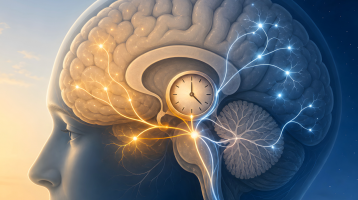
Stress hormones could also play a role. Prolonged periods without food can place a strain on the body and affect processes related to stress regulation and energy supply. One of the most important factors here is cortisol, a hormone whose release follows a distinct daily rhythm. Added to this is the so-called circadian clock. Our internal biological clock controls numerous processes in the body and helps coordinate activity, sleep, hormone production, and metabolism with the daily routine. Food intake also provides the body with temporal signals. If these signals are very irregular, this could affect the biological rhythm.
This makes the combination of late-night eating and sleep particularly interesting. People who eat little or irregularly during the day but consume large amounts late in the evening could thereby affect not only their metabolism but also the quality of their sleep. Poor or insufficient sleep, in turn, is considered an important factor in mental well-being. This could therefore create a vicious cycle: an irregular daily routine leads to irregular eating, which may affect sleep and metabolism, and sleep deprivation or psychological stress can in turn alter eating habits.
Cause or Effect?
This is precisely where one of the study’s most significant limitations lies. The study is based on observational and self-reported data. In other words, the participants themselves provided information about their dietary habits and mental health symptoms. The researchers compared this data without observing the participants over a long period under controlled conditions. Therefore, it cannot be concluded that irregular meals cause depression.
Equally, the reverse relationship could play a role, at least in part. People with depressive symptoms may have less energy and motivation to prepare regular meals. They might skip meals more often, get up later, sleep irregularly, or not feel hungry until late in the day. Medications, work schedules, social isolation, or other health factors could also influence both diet and mental health. It is therefore likely too early to derive a direct recommendation for preventing depression from these results. Rather, the study provides further evidence that daily rhythms and diet should be considered together.
What Does this Mean for Everyday Life?
The findings do not mean that you must eat your meals at exactly the same time every day from now on. A “perfect” meal plan is neither realistic nor necessary. It might make much more sense to add a little more structure to your daily routine. If you frequently skip breakfast, eat very little at lunch, and consume very large amounts in the evening, you could start by trying to spread your food intake more evenly throughout the day.
 Even small changes can be helpful. Instead of regularly skipping a meal entirely, it can be helpful to have a simple, nutrient-rich alternative on hand. Breakfast, for example, doesn’t have to be elaborate. Yogurt with fruit and oatmeal, whole-grain bread with a source of protein, or another balanced meal can be a practical way to start the day with a sensible meal.
At lunchtime, care should also be taken not to go without eating regularly until late afternoon or evening. Those who don’t have time for a longer break during work can at least plan for a simple meal that contains protein, fiber, and nutrient-rich foods. In the evening, on the other hand, it may be wise to avoid very large meals immediately before bedtime whenever possible. This does not mean that eating late is inherently unhealthy. Rather, what matters are individual habits, the total amount consumed, and whether eating late—for example—interferes with sleep.
Consistency Over Perfection
Perhaps the most important takeaway from the study is therefore not that everyone needs a rigid meal plan. Rather, it’s about a certain degree of predictability. Our bodies benefit in many ways from regular rhythms. Ideally, we sleep at relatively consistent times, exercise regularly, and don’t eat at completely random times throughout the day. A certain structure can help better regulate metabolism and daily energy needs.
At the same time, you shouldn’t put pressure on yourself. Skipping breakfast on a single day or having a late dinner doesn’t automatically mean your mental health is at risk. Health is the result of long-term habits, not isolated exceptions.
Those who don’t have a consistent daily routine—due to shift work, young children, travel, or other commitments—cannot always eat at the same times anyway. In such cases, it’s more important to ensure an adequate and balanced diet and to avoid extreme fluctuations as much as possible, rather than striving for a “perfect” mealtime.
Diet as Part of a Larger Whole
Nor should diet ever be viewed as the sole measure for preventing or treating depression. Mental health is influenced by numerous factors. These include, among others, sleep, exercise, social interactions, stress, genetic factors, personal circumstances, and existing mental or physical illnesses. Regular meals can therefore be, at most, one component of an overall health-promoting lifestyle.
At the same time, this component is noteworthy because it can be relatively easy to implement. Unlike some complicated dietary programs, it’s not about completely eliminating foods from your diet or meticulously counting calories. Instead, a simple structure can help: regular meals, as varied a selection of foods as possible, sufficient protein and fiber, and as few highly processed foods as possible.
A diet rich in plant-based foods, whole grains, legumes, nuts, fish, or other high-quality protein sources can also serve as a sound foundation. Previous research has linked balanced diets—such as the Mediterranean diet—to various health benefits, although it should not be assumed that these diets alone provide protection against depression.
Conclusion
The study, which involved more than 21,000 adults, provides an interesting indication that the timing and regularity of our meals may be more closely linked to our mental health than previously assumed. People with particularly irregular mealtimes reported depressive symptoms more frequently. The association was particularly striking among individuals who frequently ate late in the evening or regularly skipped breakfast. However, the results should be interpreted with caution. This is an observed association and not proof that irregular eating causes depression. It is also conceivable that depressive symptoms or other life circumstances lead to more irregular eating patterns.
Despite these limitations, the results are consistent with previous findings on the connection between diet, metabolism, sleep, and the biological clock. They suggest that mealtimes should be viewed more as part of one’s overall daily rhythm. For everyday life, this could lead to a simple message: It doesn’t have to be perfect, but maintaining a certain rhythm can be beneficial. Those who plan their meals as regularly as possible, avoid constantly skipping meals, and maintain a varied, nutrient-rich diet lay an additional foundation for physical—and possibly mental—well-being.
You may also be interested in...
-

The body's biological clock regulates the hunger cravings that influence when you eat. These cravings…
-
For many people, the teen years are a time of late nights and early mornings.…
-
Der suprachiasmatische Nucleus, bzw. SCN, wird als „Meisteruhr“ des menschlichen Körpers angesehen. Den SCN zu…