Researchers at Yale School of Medicine (YSM) are drawing attention to an important and preventable factor in cardiovascular disease. Their findings suggest that improving sleep could play a much greater role in heart health than many people realize. In a study published in the Journal of the American Heart Association, scientists analyzed data from nearly 1 million US veterans after September 11, 2001.
They found that adults who suffer from both insomnia and obstructive sleep apnea have a significantly higher risk of high blood pressure and cardiovascular disease than those who suffer from only one of the two conditions. This combination, known as comorbid insomnia and sleep apnea (COMISA), stood out as a particularly harmful risk category. “We spend an enormous amount of time treating late-stage cardiovascular disease, but much less time addressing modifiable risk factors in the early stages,” says Allison Gaffey, PhD, assistant professor of medicine (cardiovascular medicine) at YSM and first author of the study. “Sleep disorders, which are common among veterans, are often treated as secondary problems.”
Insomnia and Sleep Apnea Often Overlap
Doctors typically diagnose and treat insomnia and obstructive sleep apnea as separate conditions. Insomnia makes it difficult to fall asleep or stay asleep. Sleep apnea causes repeated pauses in breathing during the night. However, many people suffer from both conditions at the same time, and when they occur together, the health effects can be amplified. “These conditions don’t just coexist politely,” says Gaffey. “Treating one and ignoring the other is a bit like bailing water out of a boat without fixing the leak.”
Insomnia is characterized by the fact th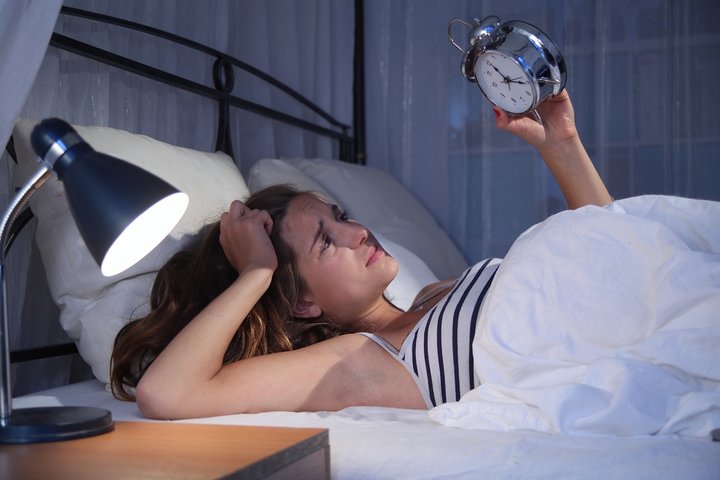 at those affected have difficulty falling asleep or staying asleep for a long period of time, even though they have enough time to sleep. Typical symptoms include lying awake for long periods of time, frequent nighttime awakenings, early morning awakenings, and feeling unrested. During the day, fatigue, irritability, and concentration problems often occur. Psychological factors such as stress, brooding, or inner tension often play an important role.
Obstructive sleep apnea, on the other hand, is a physically caused sleep disorder. It involves repeated pauses in breathing during sleep because the upper airways are temporarily blocked. These pauses in breathing lead to brief wake-up reactions that disrupt the natural sleep structure, even if those affected do not always consciously remember them. Typical signs include loud snoring, pauses in breathing, sudden gasping for air, pronounced daytime sleepiness, and morning headaches. In the long term, the condition can increase the risk of cardiovascular problems.
If both disorders occur simultaneously, they can exacerbate each other. The repeated pauses in breathing associated with sleep apnea lead to frequent waking, which can promote the development or maintenance of insomnia. Conversely, the inner tension associated with insomnia intensifies the subjective experience of poor sleep. It is therefore important to consider both disorders when treating the corresponding symptoms and, if necessary, to treat them together.
Why Sleep Disorders Put Strain on the Heart
This connection is important because sleep is essential for regulating the cardiovascular system. During healthy sleep, the heart and blood vessels have time to rest, regenerate, and reset. “Sleep touches every single part of our existence,” says Dr. Andrey Zinchuk, MHS, associate professor of medicine (pulmonary, critical care, and sleep medicine) at YSM and lead author of the study. “It is often neglected, even though it has such an important impact on our lives.” When sleep is repeatedly disrupted by frequent awakenings, shorter sleep duration, or breathing pauses, the cardiovascular system loses important recovery time. Zinchuk explains that without this nightly recovery, the heart and blood vessels cannot properly adjust and restore their balance.
During a normal, healthy night, the heart rate slows down, blood pressure drops, the vessels relax, and the body switches to a regenerative mode. During this time, the heart tissue can recover, the autonomic nervous system—i.e., the interaction between the sympathetic and parasympathetic nervous systems—stabilizes, and important repair and cleansing processes take place in the body. This nightly rhythm is crucial for the heart and blood vessels to restore their balance and function optimally.
However, if sleep is disturbed, for example by frequent waking, shortened sleep duration, or breathing pauses in obstructive sleep apnea, this recovery phase is lost. The heart remains in a state of increased activity for longer, stress hormones such as cortisol are released in greater quantities, and blood pressure and heart rate rise more frequently. In the long term, this leads to chronic stress on the cardiovascular system. The heart’s ability to adapt to changing demands decreases and the blood vessels lose elasticity. This increases the risk of high blood pressure, cardiac arrhythmia, heart attack, and stroke. What is particularly critical is that those affected are often unaware of the nighttime stress. Although sleep may appear superficial, the heart and circulatory system are continuously working to counteract the interruptions.
Prevention and Early Cardiovascular Risk
An important goal of the study was to determine whether sleep disorders influence cardiovascular risk early enough for preventive measures to still be effective. “We wanted to know whether COMISA plays a role in the early stages of cardiovascular risk,” said Gaffey, “and not just decades later, when the disease has already broken out.” According to Gaffey, persistent sleep problems should not be dismissed as minor impairments.

Over time, they place a measurable strain on your cardiovascular system. Zinchuk emphasizes that future care must focus on prevention rather than waiting to treat advanced disease. The researchers recommend that sleep be routinely examined in the same way as other important cardiovascular risk factors. Insomnia and sleep apnea should be assessed together rather than in isolation. Since sleep problems are common, measurable, and treatable, their early detection and treatment could significantly alter the course of cardiovascular disease.
How to Promote Healthy Heart Function
To protect the heart as effectively as possible, a holistic approach combining lifestyle, sleep, nutrition, exercise, and medical care is helpful. Important points are:
Healthy Sleep
Regular sleep times, sufficient sleep duration, and good sleep quality are crucial. Sleep disorders such as insomnia or sleep apnea should be detected and treated early, as they directly strain the cardiovascular system.
Balanced Diet
A heart-healthy diet is rich in fruits, vegetables, whole grains, nuts, fish, and vegetable oils and low in saturated fats, sugar, and highly processed foods. This diet lowers blood pressure, cholesterol, and inflammation levels in the body.
 Regular Exercise
Just 30 minutes of moderate exercise such as brisk walking, cycling, or swimming five days a week strengthens the heart and blood vessels, improves blood circulation, and reduces the risk of high blood pressure and diabetes.
Keep an Eye on Your Weight and Metabolism
A healthy body weight reduces the strain on the heart. Blood sugar, blood pressure, and cholesterol should be checked regularly.
Stress Reduction and Mental Health
Chronic stress increases heart rate and blood pressure. Relaxation techniques such as meditation, breathing exercises, or yoga can relieve strain on the heart.
No Smoking and Moderate Alcohol Consumption
Smoking directly damages blood vessels and the heart muscle. Alcohol should only be consumed in moderation.
Regular Check-ups
Early detection of high blood pressure, high cholesterol, or other risk factors is crucial for preventing cardiovascular disease.
You may also be interested in...
-

Our circadian rhythms and the way we sleep have been shown in several studies to…
-
Obstructive sleep apnea is one of the most dangerous sleeping disorders because it involves the…
-
New findings suggest that people who do not seek treatment for obstructive sleep apnea have…