Every morning, a precisely coordinated biological program begins in the human body. Even before we are fully awake, cortisol levels rise, body temperature changes, metabolism is activated, and certain genes are switched on while others are shut down. At night, on the other hand, repair processes take place, the immune system functions differently, and the body prepares for regeneration. Behind all these processes lies the so-called internal clock—a biological timing system that influences nearly every function of our body.
For decades, scientists have been trying to understand how this biological timekeeping actually works. Now, researchers have achieved a remarkable breakthrough: for the first time, they were able to reconstruct an extremely simplified circadian clock outside of living cells in the laboratory. The new study provides a rare insight into the molecular foundations of our internal timekeeping—and could, in the long term, help to better treat sleep disorders, jet lag, and even chronic diseases.
The Invisible Clock in the Body
Most people associate the internal clock primarily with sleep and fatigue. In reality, however, the circadian system is far more complex. The term “circadian” comes from Latin and means “roughly a day.” It refers to biological rhythms that follow a 24-hour cycle.
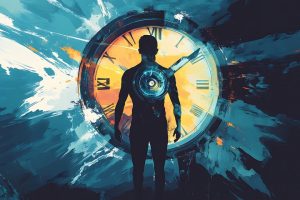
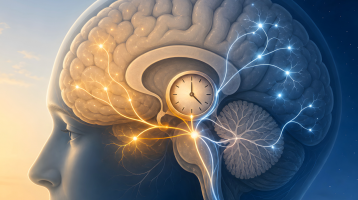
In humans, this internal timekeeping is controlled by a small area in the brain: the so-called suprachiasmatic nucleus. This center primarily responds to light signals from the eyes and synchronizes the body with the day-night rhythm of the environment.
But the real surprise of modern chronobiology is that it’s not just the brain that has a clock. Almost every organ has its own molecular timekeepers. The liver, intestines, skin, muscles, and even individual immune cells follow their own biological rhythms. They constantly communicate with one another and coordinate countless processes in time. It is precisely this complex coordination that researchers have been trying to decipher for years.
The New Laboratory Clock
The international research team did not focus directly on humans, but rather on cyanobacteria—tiny microorganisms that are among the simplest known living organisms with a biological clock. Precisely because their system is comparatively simple in structure, it is particularly well-suited for investigating the fundamental mechanisms of circadian rhythms.
The scientists isolated the key molecular components of this biological clock and reconstructed them outside living cells in a test tube. What was particularly surprising was how few components were needed to generate a stable biological rhythm.
The artificially created system began on its own to activate and deactivate certain genes at regular intervals—similar to what happens in living organisms. In the morning, certain processes were activated, and later downregulated again. This enabled the researchers to replicate a functioning internal clock in an extremely simplified environment for the first time. This is a significant step for chronobiology. Until now, many processes could only be studied in complex living cells or organisms. The new model now allows individual mechanisms to be analyzed with much greater precision.
Why the Time of Day Matters for Genes
The idea that genes operate in a time-dependent manner may sound unusual at first. In fact, however, many biological processes follow a strict schedule. The body does not produce hormones at a constant rate around the clock, and the immune system also changes its activity throughout the day.
In the morning, activity and alertness typically increase. The body prepares for movement and energy expenditure. At night, however, repair and regeneration processes dominate. Even sensitivity to pain or medications can vary depending on the time of day. Scientists now believe that thousands of genes in the human body are regulated by circadian rhythms. If this finely tuned order is disrupted, it can have far-reaching consequences.
This is particularly evident in people who work shift work. Those who regularly work at night or constantly switch between different sleep schedules throw their internal clock out of balance. Studies now link such chronic disruptions to an increased risk of cardiovascular disease, diabetes, obesity, depression, and inflammatory processes. Jet lag, too, is ultimately nothing more than a temporary misalignment of the body’s biological clock.
Why Jet Lag Is More Than Just Fatigue
After long-haul flights, many people primarily experience fatigue and difficulty concentrating. But much more is happening in the background. The body’s internal clock suddenly no longer runs in sync with the external environment.
 The problem is that not all bodily systems adapt at the same rate. While the sleep rhythm can sometimes shift relatively quickly, the metabolism, endocrine system, and digestion often take significantly longer. That is why many people also suffer from digestive problems, changes in appetite, or mood swings after traveling.
This new research could help influence such processes more specifically in the long term. If scientists gain a precise understanding of the molecular mechanisms of the internal clock, they might be able to develop medications that adjust or stabilize biological rhythms more quickly. Researchers are already working on experimental compounds that specifically target circadian control mechanisms. The goal is to set the internal clock forward or backward in a controlled manner—similar to how one resets a mechanical watch. A recent study, published in the Proceedings of the National Academy of Sciences (PNAS), is already investigating experimental compounds designed to accelerate adaptation to jet lag. Researchers hope this will enable them to influence the body’s internal clock more precisely in the future—for example, after long-haul flights or during shift work
Chronomedicine as the Future of Therapy
The study aligns with a broader trend in modern medicine: so-called chronomedicine. This approach focuses on incorporating biological rhythms more fully into diagnostics and therapy.
For a long time, the time of day played hardly any role in medicine. Today, however, we know that the timing of a treatment can be crucial. Some medications work better in the morning than in the evening, certain blood pressure medications have a stronger effect at night, and immune responses also change throughout the day.
Cancer research is particularly exciting. Scientists are currently conducting intensive studies to determine whether chemotherapy could be better tolerated or more effective if it were precisely aligned with the body’s internal clock. Researchers are also increasingly interested in disrupted circadian rhythms in connection with mental illnesses such as depression or bipolar disorder. The reconstructed mini-clock from the lab could help analyze such connections more precisely in the future.
When Technology Measures the Body Clock
Parallel to basic research, another field is developing rapidly: digital chronobiology. Modern wearables like smartwatches already collect data on sleep, heart rate, movement, and body temperature. Researchers are working to calculate a person’s individual circadian phase from this data.
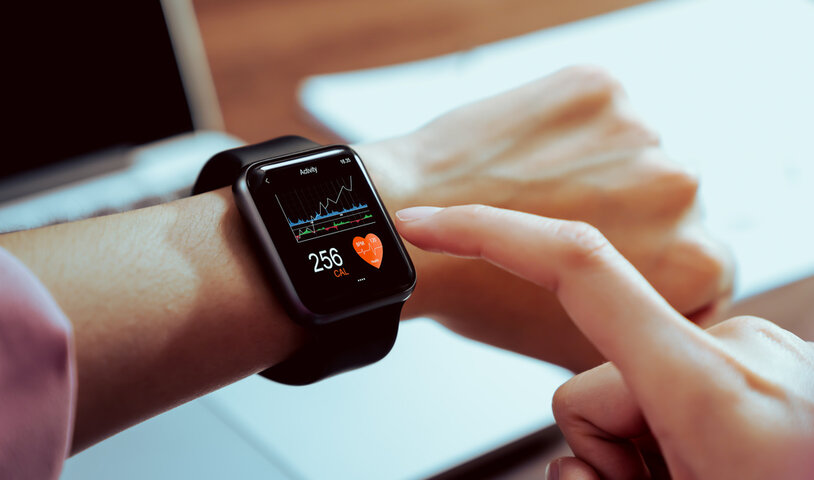
In the long term, this could lead to highly personalized recommendations. After all, not everyone follows the same biological rhythm. Some are naturally early risers, while others are significantly more active in the evening. In the future, wearables might be able to calculate: when medications work best, when exercise is particularly effective, or when the body regenerates most effectively. Light therapies or nutrition plans could also be adapted to the individual’s internal clock.
Artificial light, in particular, plays a central role in this. Many chronobiologists now warn that modern lifestyles could permanently affect the circadian system. Screen light in the evening, nighttime lighting, and irregular sleep schedules alter the signals that guide the internal clock.
Research is Still in its Infancy
Despite all the enthusiasm, experts emphasize that there is still a long way to go between current experiments and concrete therapies. The clock reconstructed in the laboratory is based on simple microorganisms and not on human cells. The human circadian system is significantly more complex.
Nevertheless, the study offers an important advantage: it allows researchers for the first time to observe the fundamentals of biological timekeeping in a controlled environment. Many processes that were previously difficult to access could thus become easier to understand. For chronobiology, the work therefore marks an important milestone. It shows that even highly complex biological processes may be based on comparatively simple molecular principles.
The Future Could be Time-Controlled
It is becoming increasingly clear that health depends not only on what happens in the body—but also when. The internal clock apparently influences far more areas of life than had long been assumed. The new laboratory clock is therefore more than just an interesting experiment.
It gives researchers the opportunity, for the first time, to study biological time almost as if it were a technical system. In the long term, this could fundamentally change medicine—from sleep therapies and jet lag treatments to individually timed medications. Chronobiology may thus be only at the beginning of a development that could permanently alter our view of health and disease.
You may also be interested in...
-

Pleasure is one of the major motivators of human behavior. Most people spend their lives…
-
Metabolism is one of the most important processes that occurs in the human body. Like…
-
There are many products on the market that help us fight the signs of aging,…