Whether you’re acing a job interview, meeting someone for the first time, or responding to an unexpected challenge—success often depends on how well you can adapt your behavior. In some situations, adapting quickly can even be a matter of survival. But how does the brain know when it’s time to abandon an old strategy and try something new?
How the Brain Reacts to Unexpected Setbacks
Neuroscientists at the Okinawa Institute of Science and Technology have identified a key mechanism in the brain that helps animals adapt when circumstances suddenly change. The findings could improve our understanding of conditions that make it difficult to break habits, including obsessive-compulsive disorder, addiction, and Parkinson’s disease. Behavioral flexibility is considered one of the most important cognitive abilities in humans and animals. It enables us to respond to new information, recognize errors, and adjust strategies when habitual behaviors no longer lead to the desired outcome. Without this ability, individuals would repeatedly make the same decisions, even when they are clearly no longer successful.

“The brain mechanisms underlying behavioral changes have been difficult to understand until now, as adapting to a specific situation is neurologically very complex. It requires coordinated activity across multiple brain regions,” explained co-author Jeffery Wickens. Previous studies had already provided evidence that so-called cholinergic interneurons play an important role in behavioral adaptation. These specialized nerve cells release acetylcholine, a neurotransmitter involved in attention, learning, memory, and decision-making processes. Dysfunction of this system has long been associated with various neurological and psychiatric disorders. “Previous work has shown that cholinergic interneurons—that is, brain cells that release the neurotransmitter acetylcholine—are involved in enabling behavioral flexibility. Here, using advanced imaging techniques, we were able to observe neurotransmitter release in real time and investigate the underlying mechanisms behind behavioral flexibility.”
To investigate this, the researchers trained mice to navigate a virtual maze. The animals learned which path led to a reward and gradually developed a reliable strategy to reach it. Such learning processes resemble the formation of habits in humans. If a certain behavior is repeatedly rewarded, the brain stores the corresponding action as a successful strategy. The challenge, however, lies in changing these habits again when conditions change. After the reward path was altered, the mice unexpectedly did not receive the reward they had anticipated. This situation corresponds to what neuroscientists call a “prediction error”—a moment when reality does not match the brain’s expectations. Such prediction errors are considered a key driver of learning and adaptation. Using high-resolution two-photon microscopy, the researchers were able to observe the activity of individual neurons and the release of neurotransmitters in the animals’ brains in near real time.
“Neurally speaking, we observed a significant increase in acetylcholine release in certain areas of the brain. And behaviorally, we observed that more mice exhibited so-called ‘loss-shift’ behavior, in which they changed their decisions in the maze after failing to receive a reward,” said first author Gideon Sarpong. The greater the increase in acetylcholine, the more likely the animals were to change their behavior. The results suggest that acetylcholine signals to the brain that a previously successful strategy is no longer working and that a new solution should be sought.
Acetylcholine Helps Break Old Habits
To test whether acetylcholine was indeed responsible for this behavioral flexibility, the researchers reduced the animals’ ability to produce the neurotransmitter. The effect was clear. The mice exhibited significantly less “loss-shift” behavior and more frequently stuck to their previous decisions, even though these no longer led to success. This allowed the scientists to demonstrate, for the first time, a direct link between the release of acetylcholine and the ability to adapt behavior.
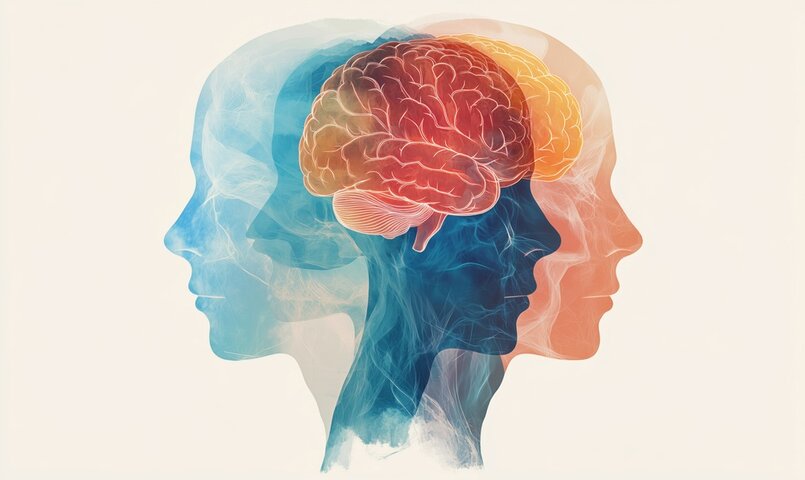
Acetylcholine is one of the oldest known neurotransmitters and influences numerous processes in the brain. In addition to its role in attention and memory, it also appears to serve as a kind of biological signal for uncertainty and change. When an expected reward fails to materialize, acetylcholine activity increases, helping the brain to question existing behavioral patterns and explore new possibilities. This mechanism could explain why humans are able to learn from mistakes and adapt their behavior to new situations.
Interestingly, not every group of cholinergic interneurons responded in the same way. While most cells increased their acetylcholine release, some smaller groups of cells showed little change or even decreased activity. According to the researchers, this could be an important mechanism for preserving previously learned information. The brain, therefore, does not immediately discard an old strategy but continues to store it in case it becomes useful again in the future.
“This suggests that the mice do not necessarily forget the previous path to the reward, but rather retain this information in case the situation changes again,” says Dr. Sarpong. This balance between stability and adaptability is considered one of the greatest challenges for the brain. On the one hand, successful behaviors must be stored; on the other hand, the brain must not become so rigid that it can no longer respond to changes.
Implications for Addiction, Obsessive-Compulsive Disorder, and Parkinson’s Disease
The researchers emphasize that behavioral flexibility involves far more than a single neurotransmitter or a single cell type. Numerous brain regions, including the prefrontal cortex, the basal ganglia, and the striatum, work closely together to enable learning, decision-making, and adaptation. Nevertheless, the new findings provide an important piece of the puzzle for understanding these complex processes. “But it is an important piece of the puzzle, since the activity of the striatum, where these cholinergic interneurons are located, is a central component of this system,” emphasized Prof. Wickens. The striatum plays a key role in habit formation, reward evaluation, and the control of goal-directed actions. Disorders in this area are associated with numerous neurological diseases.

Beyond basic research, these findings could also gain clinical significance in the long term. Parkinson’s disease involves not only a deficiency of the neurotransmitter dopamine but also frequent changes in the acetylcholine system. Similar disorders have been observed in schizophrenia, substance use disorders, and obsessive-compulsive disorder (OCD). Particularly in cases of addiction and OCD, those affected often find it difficult to break established behavioral patterns, even when these have negative consequences.
“Acetylcholine levels are often altered in the treatment of neuropsychiatric disorders such as Parkinson’s disease or schizophrenia; therefore, understanding the function of this neurotransmitter is essential for the treatment of many neuropsychiatric disorders,” said Prof. Wickens. “Particularly in conditions such as addiction and obsessive-compulsive disorder, we observe difficulties in breaking habits and changing behavior. Understanding the mechanisms of behavioral flexibility could therefore one day help us develop better treatment methods.”
Although the research is still in its early stages and the results were initially obtained in mice, they provide valuable insights into how the brain reacts to unexpected changes. In the long term, such findings could contribute to the development of therapies that help people overcome harmful habits more easily, respond more flexibly to new situations, and regain control over their behavior.
Behavioral Flexibility and the Brain’s Internal Clock
The study’s findings can also be viewed in the context of chronobiology, i.e., research into the body’s biological rhythms. Although this aspect was not directly investigated here, it is known that the brain’s ability to react flexibly and adapt decisions is not constant but is influenced by the circadian rhythm. This internal clock regulates sleep-wake cycles, attention, learning ability, and many cognitive processes, ensuring that the brain is more receptive and adaptable at certain times of the day than at others.
Acetylcholine plays a central role in this process, as its activity is closely linked to wakefulness, attention, and the processing of new information. Since this neurotransmitter also appears to be crucially involved in the adaptation of behavior following unexpected events, it could serve as a link between cognitive flexibility and biological daily rhythms. Disruptions to sleep or the internal clock could therefore also impair the ability to utilize new information and modify habitual behavioral patterns.
It is also interesting to note that conditions such as Parkinson’s disease, obsessive-compulsive disorder, or substance use disorders often involve both impaired behavioral adaptation and sleep and circadian rhythm disturbances. This suggests that the two systems may be more closely linked than previously thought. Although the current study did not directly investigate this connection, it provides another piece of the puzzle regarding how temporal organization in the brain and flexible decision-making interact.
You may also be interested in...
-

What part of the body is responsible for our circadian rhythm? If you answered "the…
-
Scientists at UC Merced have developed artificial cells that can measure time perfectly – similar…
-
Looking for the best study strategy for effective recall? Studying before bedtime may be the…