Imagine a train standing at the platform, ready to depart. All the passengers have taken their seats, the conductors have checked the tickets, and the doors are ready to close—yet the train does not start moving. The reason: the train driver’s watch has stopped. Without a functioning time signal, the entire departure is canceled, even though all other conditions have been met.
A similar principle applies to living organisms. Growth and development do not occur randomly but follow a precisely coordinated biological timetable. Every cell must know when certain genes need to be activated or deactivated so that tissues and organs can develop in the correct sequence. If this internal timing system fails, development can stall or even come to a complete halt. Researchers at Cold Spring Harbor Laboratory (CSHL) have now succeeded in identifying such a central developmental clock in the nematode Caenorhabditis elegans (C. elegans). The findings provide new insights into how cells coordinate their development over time and could, in the long term, contribute to a better understanding of developmental disorders and genetic diseases.
Development Follows a Precise Timeline
 Several years ago, the research team led by Professor Christopher Hammell discovered that the development of C. elegans is controlled by successive bursts of gene expression. Gene expression refers to the process by which the information stored in genes is used to produce proteins. During development, specific genes are activated only for a limited period of time. These bursts of genetic activity follow a precisely defined sequence and ensure that each developmental phase begins only after the previous one has been successfully completed. Although this pattern was already known, one crucial question remained unanswered: What mechanism sets the pace and ensures that these bursts of activity begin and end at the right time?
MYRF-1 and LIN-42 Form the Central Developmental Clock
The new study now shows that two proteins—MYRF-1 and LIN-42—together form a feedback loop that functions as the central developmental clock of the worm genome. This molecular mechanism determines both the onset and the duration of the individual gene expression bursts and ensures that development proceeds step by step without temporal overlaps.
According to the researchers, this is the first known example of a biological clock that does not operate cyclically. While, for example, the human internal clock repeats the sleep-wake cycle daily, the developmental clock fulfills a completely different function. It controls a limited number of developmental steps that may only be carried out once and in a fixed sequence.
Professor Christopher Hammell describes this principle using the analogy of a ratchet. During development, genes are turned on and off multiple times, yet the entire process moves exclusively forward. There is no provision for reversing or repeating individual developmental steps. This ensures that the organism reliably completes its developmental program through to the adult stage.
Precise Control via a Biological Feedback Loop
To elucidate the underlying mechanism, the scientists combined various experimental approaches. In addition to classical molecular biology methods, they employed DNA sequencing, protein sequencing, and the artificial intelligence-based structure prediction program AlphaFold. This combination enabled the researchers to analyze the function of the involved proteins in detail and better understand their interactions.
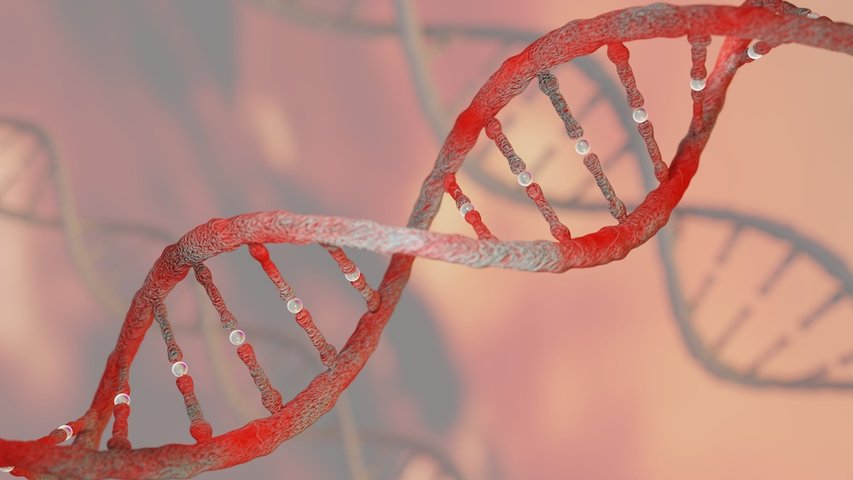 The studies showed that MYRF-1 performs several key roles throughout development. The protein initially acts as a trigger for the onset of a new developmental stage. At the same time, it is involved in a control mechanism that ensures this stage is fully completed before the next developmental step can be initiated. As soon as MYRF-1 triggers a new surge in gene expression, it activates the protein LIN-42. LIN-42 then regulates the intensity and duration of genetic activity, preventing genes from remaining active too early or for too long. It is only through the interaction of both proteins that the developmental processes can be precisely timed.
The researchers therefore refer to a central control unit that governs the entire course of development. MYRF-1 not only functions as a component of the biological clock but also acts as a “key maker.” For each developmental stage, the appropriate “key”—so to speak—is provided to unlock the next developmental step.
The importance of this function became evident in experiments in which MYRF-1 was specifically inactivated. In these cases, the entire developmental program collapsed. Without the protein, the cells could no longer initiate the next developmental stages, causing development to halt at a fixed point. Professor Hammell describes this as a finding that is unique to date, since MYRF-1 is both a component of the overarching developmental clock and a key factor for each individual growth stage.
Do the Developmental Clocks of All Cells Work together?
Leemor Joshua-Tor, research director at Cold Spring Harbor Laboratory, was also involved in the study. Together with her team, she now plans to investigate how MYRF-1 and LIN-42 interact at the molecular level and how the developmental clocks of individual cells are coordinated with one another.
One particularly intriguing question is whether individual cell clocks communicate with one another. Although each cell apparently has its own MYRF-1/LIN-42 regulatory circuit, all cells seem to synchronize their development almost perfectly. How this synchronization works remains unknown. If it turns out that cells coordinate their timing programs with one another, this would fundamentally expand our understanding of developmental biology.
Implications for Medicine and Developmental Biology
The discovery of this central developmental clock could be of great significance far beyond research on the nematode C. elegans. Although this model organism is a comparatively simple worm, many fundamental biological mechanisms of cell division, gene regulation, and development are evolutionarily conserved across different animal species. Findings from research on C. elegans have therefore already contributed significantly to our understanding of numerous processes in humans. The developmental clock that has now been identified could also provide insights into how complex organisms control the precisely timed interplay of cell growth, cell differentiation, and organ development.
 Of particular interest is the question of how cells recognize when they must divide, specialize, or complete their development. During embryonic development, a single fertilized egg cell gives rise to billions of specialized cells, which ultimately form tissues and organs. For this process to proceed without error, countless genes must be activated at precisely defined times and subsequently deactivated. Even minor deviations in the timing can cause cells to develop incorrectly or organs to fail to form completely. The newly discovered MYRF-1/LIN-42 clock provides, for the first time, a concrete model of how such a biological timetable might be organized at the molecular level.
In the long term, these findings could open up new avenues for research into developmental disorders and genetic diseases. Many congenital malformations arise as early as the first stages of embryonic development when the temporal regulation of gene activity is disrupted. A better understanding of the underlying molecular mechanisms could help identify the causes of such disorders more precisely and, in the long term, lead to the development of more targeted diagnostic and treatment options. The findings could also be significant for regenerative medicine and stem cell research. In these fields, scientists are attempting to specifically reprogram stem cells into certain cell types to replace damaged tissue or entire organs. However, this requires precise control of genetic developmental programs—precisely the processes that could be regulated by a biological developmental clock.
Furthermore, the study raises fundamental questions about the organization of biological systems. It was previously known that organisms possess internal clocks, such as the circadian rhythm, which controls the sleep-wake cycle. However, the developmental clock now described differs fundamentally from these periodic systems. It does not operate in repeating cycles but rather controls a one-time, precisely defined sequence of developmental steps. This discovery thus opens up a completely new field of research focused on the temporal organization of biological developmental processes. Just as a train can leave the station only after receiving the correct signal, every cell also requires a precise timing system to continue its development at the right moment. The newly discovered MYRF-1/LIN-42 clock appears to provide precisely this signal and ensures that development proceeds reliably, step by step, until the organism is fully formed. The results impressively demonstrate how important precise temporal control is for life and could contribute significantly in the future to a better understanding of the biological foundations of growth, development, and disease.
You may also be interested in...
-

Our circadian rhythm governs many of our daily activities, from when we sleep and wake to when…
-
Scientists have long tried to figure out exactly how cancer occurs in hopes of finding…
-
Pleasure is one of the major motivators of human behavior. Most people spend their lives…