Consciousness is one of the greatest mysteries of modern neuroscience. Every day, we shift between different states: we are awake, asleep, dreaming, or lose consciousness—for example, during general anesthesia. For a long time, it was assumed that an unconscious brain is largely inactive. The idea seemed obvious: if we perceive nothing, hear nothing, and have no conscious thoughts, the underlying brain activity must also be greatly reduced.
However, new research findings paint a completely different picture. The brain remains active even during deep unconsciousness. It continues to process information, generate electrical signals, and exhibit complex neural patterns. The crucial difference apparently lies not in whether neurons are active—but in how this activity is organized and transmitted between different brain regions. These findings not only change our understanding of consciousness but also demonstrate how important temporal processes and neural rhythms are to the brain’s functioning. This is precisely where the connection to chronobiology arises: for the brain, too, is not a static organ but a dynamic system governed by various biological rhythms.
The Brain Does Not Function Chaotically, But Rather in Temporal Patterns
Chronobiology deals with biological rhythms and the question of how organisms process temporal information. The best-known are circadian rhythms, which follow a roughly 24-hour cycle and influence sleep, hormones, body temperature, and metabolism.
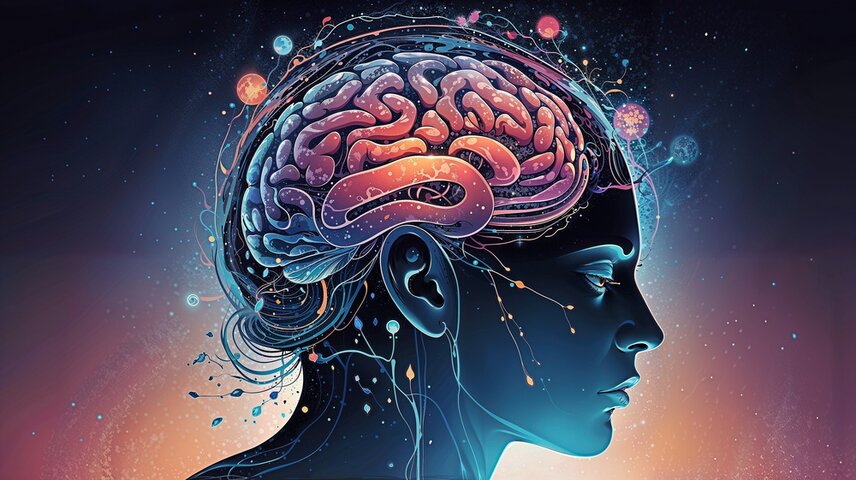 But there are also numerous rhythmic processes within the brain itself. Nerve cells communicate via electrical impulses that occur at different frequencies. These neural oscillations determine when and how information is processed.
Therefore, consciousness does not seem to depend solely on how active individual brain cells are. It may be far more important whether different networks can communicate flexibly with one another. Consciousness could thus be less a question of the “amount” of activity and more a question of temporal organization.
Being Unconscious Does Not Mean that the Brain is Shut Down
A recent study by researchers at the University of Basel and the Institute for Molecular and Clinical Ophthalmology (IOB) impressively demonstrates that the brain by no means simply falls silent during general anesthesia.
The cerebral cortex is considered one of the most important regions for conscious processing. It was long assumed that anesthetics primarily shut down these areas. However, the researchers took a closer look at which cell types remain active during anesthesia and how their communication changes.
To do this, they used modern genetic methods and examined various types of nerve cells in the cerebral cortex. The results were surprising: Certain nerve cells, particularly the so-called pyramidal neurons in layer 5, actually showed increased activity during general anesthesia.
The key point, however, was not the activity itself, but its structure. The neurons began to work in a more synchronized manner. Many cells fired simultaneously, thereby generating a more uniform pattern.
The researchers described this state using a vivid analogy: When awake, the brain resembles a crowd in which many conversations are taking place simultaneously. Different pieces of information are processed, compared, and linked together. During anesthesia, the situation is more like a crowd chanting the same phrase in unison. There is activity, but the diversity of information decreases. This limited communication could explain why, despite the presence of brain activity, no conscious experience arises.
The Brain Processes Language Even Without Consciousness
Another study by researchers at Baylor College of Medicine provides an additional surprising insight: the brain can process complex information even under general anesthesia. The scientists had the rare opportunity to directly measure the activity of individual neurons in the hippocampus. The hippocampus is a region of the brain that is particularly important for memory, learning, and the processing of new information. The research was conducted on patients who were under general anesthesia during epilepsy surgery. Using so-called Neuropixels probes, the researchers were able to observe how individual neurons responded to various acoustic stimuli.
 First, simple tones were played, with unexpected sounds occasionally interspersed between them. Although the patients were unconscious, the brain recognized these deviations. The neurons did not react randomly but exhibited patterns suggesting that the brain perceived differences. It became even more surprising when the researchers played short stories. Activity in the hippocampus showed that the brain continued to process linguistic information. It could distinguish between different types of words and even recognize patterns suggesting that upcoming words were being predicted.
Such predictive ability is normally associated with conscious attention. The fact that it was also observed during anesthesia challenges the classic notion that complex processing is possible only in a conscious state.
Information Processing and Consciousness Are Not the Same Thing
Together, the two studies demonstrate an important principle: The brain can process information without this automatically giving rise to consciousness. One part of the brain can recognize sounds, analyze speech, and predict patterns. At the same time, conscious perception may be shut off. This means that consciousness likely does not arise simply from the activity of individual brain regions.
Rather, what appears to be crucial is how information is exchanged between different networks. A conscious experience could arise when a wide variety of information is integrated and flexibly interconnected.
During anesthesia, activity persists, but communication changes. Networks operate less independently of one another, and information may no longer be able to be integrated in the same way.
What Research on Sleep and Other States of Consciousness Reveals
Findings from anesthesia research are also important for understanding other states of consciousness. Sleep, in particular, shows that a seemingly quiet state should not be equated with inactivity. While we sleep, the brain continues to work intensively: it processes information, consolidates memories, and regulates emotional processes.
 From a chronobiological perspective, sleep is a central rhythm of the human body. The brain’s internal clock controls the transition between wakefulness and rest and is primarily influenced by light signals from the environment. The hormone melatonin plays an important role in this process, signaling to the body when a rest phase begins.
Even during sleep, brain activity does not simply switch to an “off” state. Different sleep phases serve different purposes: During deep sleep, among other things, memories are processed and important regenerative processes are supported, while REM sleep is characterized by particularly intense brain activity associated with dreaming.
Although anesthesia and sleep are not the same thing, they reveal a common insight: a brain can be active without conscious experience. The crucial difference lies in how information is processed and interconnected between different brain regions.
This research thus highlights an important principle of chronobiology: it is not only the activity of the brain itself that is decisive, but also its temporal organization. The brain’s rhythms influence how we perceive, learn, remember, and experience things consciously.
Why These Findings Are Important for Medicine
A better understanding of the neural mechanisms behind unconsciousness could transform medicine in the long term. During surgery, anesthesiologists must closely monitor the depth of anesthesia. Insufficient anesthesia can be problematic, while unnecessarily deep anesthesia places a strain on the body. If researchers gain a better understanding of which brain rhythms and networks are responsible for consciousness, anesthetics could be administered in a more targeted manner.
These findings could also be important for people with neurological disorders. Research on the hippocampus, for example, shows that neural signals can contain information about language. In the future, this could contribute to the development of brain-computer interfaces that open up new communication possibilities for people who have lost the ability to speak.
The Brain Never Completely Rest
Modern neuroscience is fundamentally changing our understanding of consciousness. Unconsciousness does not mean that the brain is shut down. On the contrary: it remains active, processes information, and generates complex patterns. The difference between consciousness and unconsciousness seems to lie less in the activity itself than in the way this activity is organized. Synchronization, communication, and temporal coordination play a decisive role.
In this way, the research also highlights a central insight of chronobiology: life and thought are based not only on individual biological processes, but on precisely coordinated rhythms. Our brain is not a static system—it is a network of temporally coordinated processes that determine how we perceive, remember, and consciously experience the world.
You may also be interested in...
-

Scientific evidence of the relationship between deep sleep and brain health has been rapidly increasing…
-
Although your brain may seem to shut off when you sleep, research has found that…
-
Why do you need sleep? A new study suggests that sleep resets your brain by…