A new study by researchers at the University of Illinois Chicago provides initial evidence that time-restricted eating could be a promising addition to the management of type 1 diabetes for certain adults. Participants who ate their meals within an eight-hour window achieved better blood sugar levels after six months than participants who specifically reduced their calorie intake. The results are notable because, while intermittent fasting has already been extensively studied in relation to obesity, metabolic health, and type 2 diabetes, very little data has been available to date on how this dietary pattern affects people with type 1 diabetes.
The study, led by Krista Varady, a professor of kinesiology and nutritional sciences at the University of Illinois Chicago, is therefore primarily intended to answer a question that has received little research attention to date: Can a time-restricted eating window be used by people with type 1 diabetes without increasing the risk of dangerous blood sugar fluctuations? The initial results are encouraging. At the same time, the researchers emphasize that the study does not yet provide a sufficient basis for recommending intermittent fasting as a treatment for type 1 diabetes.
What Exactly is Type 1 Diabetes?
To understand the significance of the study, it’s worth first taking a look at the disease itself. Type 1 diabetes differs fundamentally from type 2 diabetes, even though both conditions can lead to persistently elevated blood sugar levels. In a healthy person, glucose is released into the blood after the consumption of carbohydrates. When blood sugar levels rise, the pancreas produces insulin. This hormone enables the body’s cells to absorb glucose from the blood and use it as an energy source.
 In type 1 diabetes, this mechanism no longer functions adequately. The immune system mistakenly attacks the insulin-producing beta cells in the pancreas. As the disease progresses, these cells are largely or completely lost. As a result, the body can produce only very little or no insulin on its own. This has a crucial consequence: People with type 1 diabetes rely on lifelong insulin therapy.
Insulin can be administered, for example, through multiple daily injections or with the help of an insulin pump. Modern systems can also continuously monitor blood glucose levels and partially automate insulin delivery. Nevertheless, managing blood sugar remains a complex task. This is because insulin requirements depend, among other things, on what and how much a person eats, how much physical activity they engage in, whether they are under stress, how their body reacts to certain foods, and what other factors influence their metabolism.
Why Nutrition Can Be Especially Complicated with Type 1 Diabetes
For people with type 1 diabetes, a meal is therefore not just a meal. Carbohydrates cause glucose to enter the bloodstream. To counteract this rise, the appropriate amount of insulin must be administered.
For example, someone who eats a high-carbohydrate meal usually needs a correspondingly adjusted dose of insulin. If, on the other hand, a meal is skipped or significantly delayed, the situation for insulin therapy also changes. This is precisely why the question of intermittent fasting in type 1 diabetes is particularly interesting—but also particularly challenging.
With intermittent fasting, there aren’t necessarily strict rules about what to eat. Instead, the focus is on when you’re allowed to eat. A well-known variation, for example, is the so-called 16:8 model: 16 hours without calorie intake are followed by an eight-hour eating window. A similar principle was examined in the new study. Participants were allowed to eat between 12:00 p.m. and 8:00 p.m. Outside of this time window, they consumed no calories.
32 People Took Part in the Study
For the study, the scientists recruited 32 adults from the Chicago metropolitan area. The participants had type 1 diabetes and were also classified as obese according to the BMI criteria used. The researchers randomly divided the participants into three groups. Their goal was to compare whether a time-restricted eating window affects metabolism differently than traditional calorie restriction or continuing previous eating habits.
The three groups differed as follows:
- One group restricted food intake to a daily eight-hour window, between 12 p.m. and 8 p.m. Participants were not required to count calories.
- A second group reduced their daily calorie intake by 25 percent.
- A control group maintained their previous eating habits.
The study lasted six months. This allowed the scientists not only to compare two different dietary approaches with each other but also to observe how the changes unfolded compared to a group that maintained its previous habits.
HbA1c Levels Improved
The changes in HbA1c levels were particularly interesting. This laboratory value is frequently used to assess long-term blood sugar control in people with diabetes. While a single blood sugar measurement is merely a snapshot, the HbA1c level provides an indication of what the average blood sugar level was over a longer period of time. After six months, the HbA1c levels of the participants who adhered to the eight-hour eating window had decreased by an average of about 0.5 percentage points.
Even more interesting was the comparison with the group that had reduced its calorie intake by 25 percent. The participants who practiced time-restricted eating showed better trends in their blood sugar levels. This could suggest that, for certain people, the amount of calories consumed may not be the only decisive factor. The timing of food intake could also play a role. However, it is not yet possible to conclude from this small study that an eight-hour eating window is generally better than calorie reduction.
Did Fasting Lead to Dangerous Blood Sugar Levels?
A study on intermittent fasting and type 1 diabetes raises a particularly important safety question: Does skipping meals increase the risk of hypoglycemia or other dangerous metabolic disturbances?
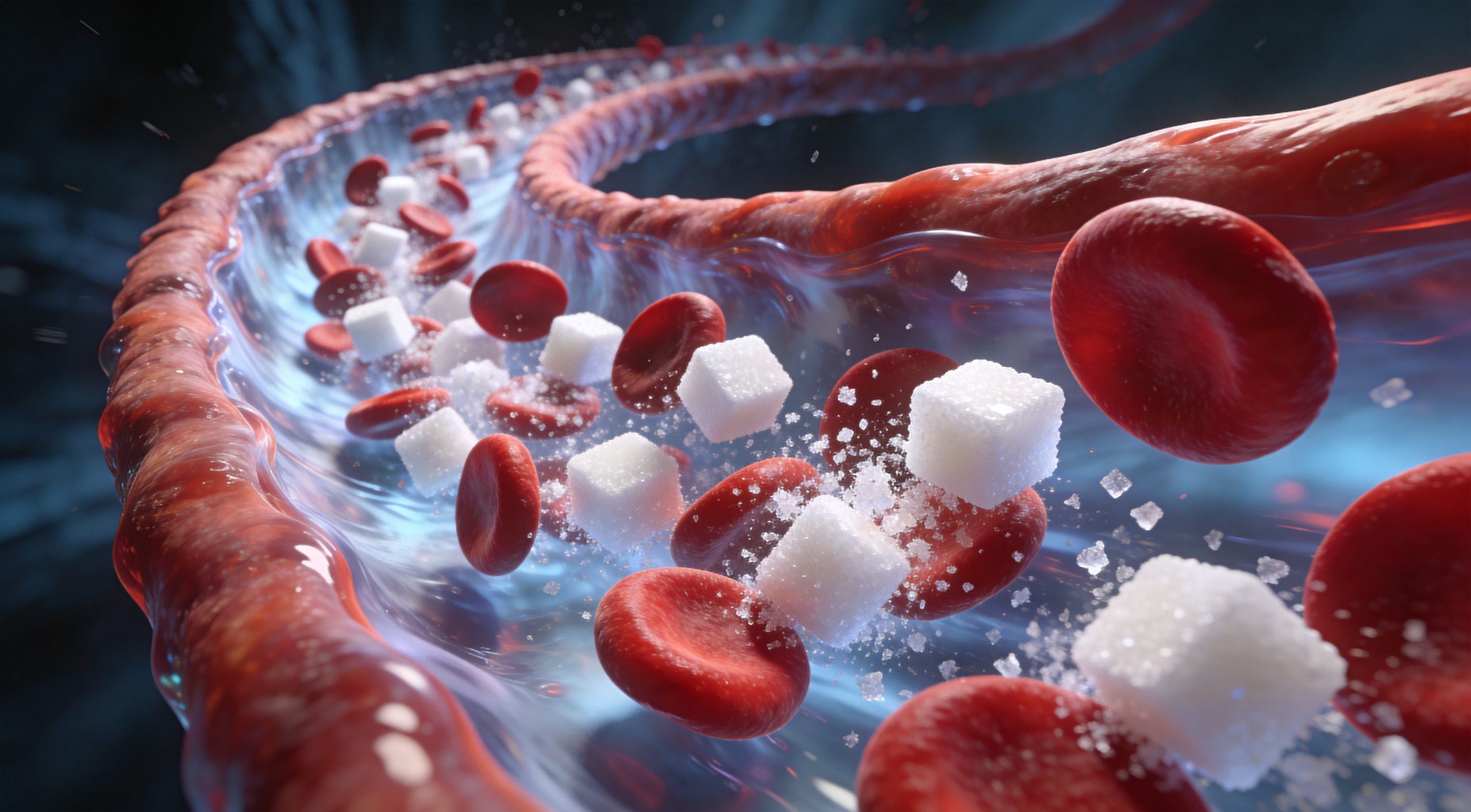 People with type 1 diabetes must take insulin even when they are not eating. If insulin therapy is not adjusted appropriately, a change in eating patterns can therefore have significant effects on blood sugar levels. However, the researchers found no evidence in their study that time-restricted eating led to an increased risk of dangerously high or low blood sugar levels.
Nor did the dietary approach examined show any increased risk of diabetic ketoacidosis—a potentially life-threatening metabolic disturbance resulting from a severe insulin deficiency.
This is a key point of the study. Even if a dietary approach could potentially help with weight or average blood sugar levels, it would only be of interest to people with type 1 diabetes if it could be safely integrated into their daily lives.
Why the Results Must Still be Interpreted With Caution
Despite the positive results, this does not prove that intermittent fasting is a new treatment for type 1 diabetes. The main reason is the small number of participants. Only 32 people took part in the study. A study this small can provide interesting initial insights, but it is not large enough to reliably determine whether the results are generally applicable to people with type 1 diabetes.
In addition, the participants constituted a relatively specific group: adults with type 1 diabetes who were also classified as obese according to the BMI criteria used. The results therefore do not necessarily apply to children and adolescents with type 1 diabetes, people of normal weight, or other patient groups. Furthermore, the six-month duration of the study does not yet allow for conclusions about the long-term effects of such a dietary model when practiced over many years.
Intermittent Fasting is Not the Same as Eating Less
Another interesting aspect of the study is that participants in the fasting group were not explicitly required to reduce their calorie intake. Instead, the central guideline was to limit food intake to eight hours per day. This distinguishes this approach from traditional diets, which, for example, specify a certain daily calorie intake.

In practice, however, a shorter eating window can indirectly lead people to eat less. Those who are only allowed to eat between lunch and dinner simply have fewer opportunities for meals and snacks.
The study therefore does not definitively answer the question of whether the observed effect is actually due to the timing of food intake or, in part, to the fact that this changes overall eating behavior.
What the Researchers Plan to Investigate Next
For Krista Varady and her research team, the results are primarily a starting point for further investigation. Larger studies involving participants from multiple research centers could show whether the observed improvements in blood sugar control can indeed be confirmed. It would also be important to include different groups of people with type 1 diabetes.
Further research could, for example, clarify whether similar effects occur in people with different body weights and what role age, physical activity, insulin therapy, and dietary composition play. Long-term safety also needs to be further investigated.
Not an Invitation to Fast on Your Own
The study authors themselves do not view their findings as a call for people with type 1 diabetes to immediately change their diet. This is particularly important because a change in eating windows can also affect insulin therapy. People with type 1 diabetes cannot simply ignore their insulin needs just because they are not eating for a few hours.
Varady therefore emphasizes that people with diabetes should discuss changes to their eating habits with their endocrinologist or treating physician. This applies in particular to forms of fasting in which no calories are consumed for extended periods. Individualized adjustments to therapy and close monitoring of glucose levels can be crucial.
An Interesting New Area of Research
The study from the University of Illinois at Chicago thus primarily provides initial evidence that time-restricted eating should possibly also be investigated in people with type 1 diabetes.
The decrease in HbA1c levels by an average of about 0.5 percentage points and the absence of any discernible additional risk for severe hypoglycemic episodes are interesting findings. However, they are not yet sufficient to derive general dietary recommendations.
The true significance of the study therefore may lie less in the fact that it already presents a new treatment method. Rather, it opens up a field of research that has been relatively under-explored to date.
You may also be interested in...
-

According to a new study funded by Diabetes UK, it seems that insomnia boosts diabetes…
-
When intermittent fasting became all the rage among Hollywood stars, skeptics were skeptical of the…
-
New research has discovered that eating chocolate in the morning provides health benefits for postmenopausal…