How much sleep we get has long been considered an important factor in our health. But a night’s sleep isn’t simply a matter of a certain number of hours. While we sleep, our brains go through various sleep stages that alternate several times throughout the night. A large new study now shows that this sleep architecture also appears to be linked to future health.
Researchers at Capital Medical University in China analyzed sleep data from 95,559 people in the UK Biobank. The participants wore a motion sensor on their wrist for seven days and nights. The data was then analyzed using a deep learning method to estimate different sleep stages and other sleep characteristics.
The results are remarkable: More REM sleep was statistically associated with a lower risk of 83 different diseases. More deep sleep was also linked to a lower risk of several diseases. At the same time, very short sleep durations, irregular sleep patterns, and longer periods of wakefulness during the night were associated with poorer health outcomes. But what lies behind these correlations?
Sleep is More than Just a Clock Ticking Away
Anyone who answers “seven hours” to the morning question “How long did you sleep?” is describing only part of what happened during the night. That’s because sleep consists of different phases. In simple terms, three main categories are distinguished: light sleep, deep sleep, and REM sleep. These phases alternate throughout the night in recurring cycles. REM sleep is the phase in which vivid dreams occur particularly frequently. REM stands for “Rapid Eye Movement.” At the same time, the brain is unusually active during this phase.
Deep sleep, on the other hand, is part of what’s known as non-REM sleep and is often described as a particularly restorative sleep phase. During this time, brain activity changes significantly while various physical recovery processes take place. This means that two people can both spend seven hours in bed and still have slightly different sleep architectures. It was precisely these differences that the researchers wanted to examine more closely.
Nearly 100,000 People Observed Over Several Years
For the study, the research team drew on data from the UK Biobank, a large-scale British longitudinal study. The final analysis included 95,559 individuals. The average age was approximately 56 years. The participants were then followed for a median of 8.9 years. During this period, the researchers were able to use health data to identify which diseases were newly diagnosed.
The number of health characteristics examined was particularly extensive. The scientists considered 1,049 different disease phenotypes and investigated whether certain sleep characteristics were statistically associated with their subsequent onset. In this way, the study went significantly further than many traditional sleep studies, which, for example, focus only on cardiovascular disease, diabetes, or depression.
How Was Sleep Measured?
An important difference from many earlier studies lies in the method of data collection. Participants did not have to report each morning how long they had slept. Instead, they wore an accelerometer on their wrist. These devices record movement. Using a specially developed deep-learning algorithm called SleepNet, various sleep parameters were then derived from the motion data. These included REM sleep, deep sleep, light sleep, total sleep duration, nighttime wake periods, and sleep regularity. This has an advantage: The researchers were not solely reliant on the participants’ memories.
However, there is also an important limitation. A motion sensor on the wrist is not the same as sleep measurement in a sleep lab. In a traditional polysomnography, brain waves, eye movements, and muscle activity—among other things—are recorded directly. In contrast, the sleep stages in this study were estimated algorithmically from the acceleration data. The results are therefore interesting but should be interpreted accordingly.
More REM Sleep Was Associated With a Lower Risk of Disease
The association was particularly clear for REM sleep. The researchers found that an increase in REM sleep duration of one interquartile range—equivalent to 47.6 minutes—was associated with a lower risk of 83 diseases. These included conditions from various categories, such as cardiovascular diseases, neurological disorders, and other health conditions. For some diseases, the statistical associations were particularly pronounced.
 For example, the hazard ratio for heart failure was 0.74. For dementia, it was 0.54. A hazard ratio of 0.20 was observed for Parkinson’s disease. However, these figures should not be interpreted to mean, for example, that 47 minutes of additional REM sleep automatically halves the risk of dementia. The hazard ratios describe the statistical association within this study population. They do not prove that more REM sleep prevents the respective condition.
REM sleep is of particular scientific interest because the brain is very active during this phase. In certain aspects, neural activity resembles the waking state more closely than during other sleep phases. REM sleep is associated, among other things, with memory consolidation, emotional processing, and certain learning processes. This does not mean that REM sleep alone is responsible for these functions. Sleep is a complex interplay of different phases. The new study therefore provides further evidence that a balanced sleep architecture may be relevant to health.
Deep Sleep also Showed Interesting Correlations
It wasn’t just REM sleep that stood out. A longer duration of deep sleep was associated with a lower risk of seven diseases. These included, among others, type 2 diabetes and major depressive disorders. A correlation was also observed for Parkinson’s disease. For example, with a 47.5-minute interquartile increase in deep sleep, the hazard ratio was 0.89 for type 2 diabetes and 0.86 for major depressive disorder.
Again, it is important to note that the study shows associations and does not prove a protective effect. Nevertheless, the results underscore that when asking, “Am I getting enough sleep?” it may not just come down to the total number of hours.
Insufficient Sleep Stood Out in Particular
The results for people with very short sleep duration were particularly striking. The researchers examined the relationship between sleep duration and 86 different disease phenotypes. For 69 of these, the range with the lowest observed risk was predominantly between six and eight hours of sleep. People who slept less than five hours, on the other hand, showed a particularly high number of unfavorable associations.
In this group, significant unfavorable associations were found for 37 diseases compared to the reference group of six to eight hours. However, this does not mean that everyone needs exactly seven hours of sleep. Individual sleep needs vary. Age, genetic factors, lifestyle, health status, and many other factors play a role. Rather, the study shows that very short sleep durations were associated with a broad spectrum of health risks in this population.
Sleep Rhythm also Appears to Play a Role
Another interesting aspect of the study was the question of how regularly people sleep. The findings showed that greater fluctuations from night to night were associated with a higher risk of several diseases. Greater sleep irregularity was linked, among other things, to a higher risk of anxiety disorders and major depressive disorders. The amount of time people were awake after falling asleep also played a role.
This so-called wake time after falling asleep—known in technical jargon as WASO, “wake after sleep onset”—was associated with an increased risk of six conditions. These included, among others, alcohol abuse, psychoactive substance dependence, and osteoarthritis. This makes it clear that sleep quality isn’t just about falling asleep quickly. The question of how stable and continuous sleep is throughout the night could also be relevant to long-term health.
A Regular Rhythm Could Be More Important Than Previously Thought
This aspect is particularly interesting from a chronobiological perspective. Our bodies do not function independently of an internal clock. The so-called circadian rhythm controls, among other things, sleep and wakefulness, body temperature, hormone release, and numerous metabolic processes. This rhythm is synchronized daily by external signals. Light is the most important timing cue.
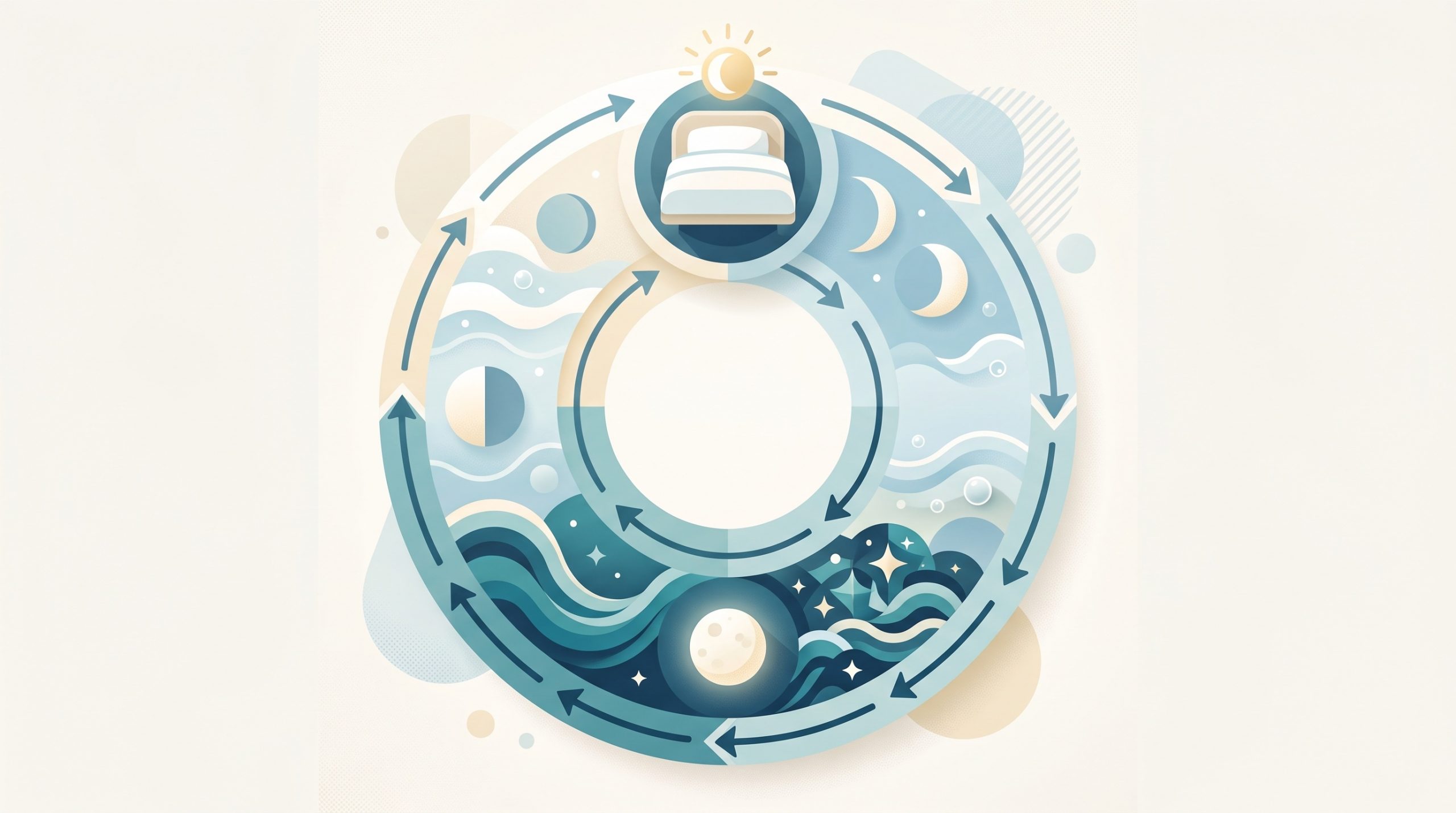 If bedtimes fluctuate widely, this can lead to a mismatch between sleep and the body’s internal clock. While the new study does not prove that an irregular sleep rhythm causes disease, it does provide further evidence that regularity itself may be an important component of healthy sleep. One of the more interesting findings concerns the relationship between sleep duration and health. The risk of disease did not simply increase according to the principle “the more sleep, the better” or “the less sleep, the worse.” Instead, the researchers found a nonlinear relationship for many disease phenotypes.
This means: There was a range within which the observed risk was lowest, while both very short and longer sleep durations could be associated with certain diseases in a more unfavorable way. For the majority of the diseases examined that showed such a relationship, the range with the lowest risk was between six and eight hours. This aligns with the idea that sleep cannot be arbitrarily shortened or extended indefinitely without altering the health-related associations.
The Researchers Found a Total of 156 Significant Associations
When all the sleep characteristics examined were considered together, the so-called phenotype-wide association analysis—after strict correction for multiple tests—identified a total of 156 statistically significant associations between sleep characteristics and new-onset diseases.
These included, among others:
- 83 associations with REM sleep duration,
- 7 with deep sleep,
- 7 with light sleep,
- 50 with total sleep duration,
- 6 with wake time after falling asleep,
- 3 with sleep irregularity.
This broad distribution illustrates just how complex the relationship between sleep and health is. There is apparently no single sleep parameter that explains all health outcomes.
What Actually Happens During the Night?
To better understand the findings, it’s worth taking a look at the normal sleep cycle. After falling asleep, non-REM sleep begins first. This is followed by deeper sleep stages. Later in the night, the proportion of REM sleep typically increases. This sequence repeats itself several times.
 However, the individual sleep cycles are not identical. Deep sleep is typically more prevalent in the first half of the night, while REM phases can become longer toward morning. People who regularly get up very early—and thus miss out on part of the latter half of the night—might therefore experience a different proportion of certain sleep phases. This is one of the reasons why sleep duration alone does not tell the whole story.
What the Study Cannot Prove
As interesting as the results are, the study has a crucial limitation: it is an observational study. In other words, the researchers observed people’s sleep patterns and which diseases occurred later on. They did not experimentally alter the participants’ sleep. Therefore, it cannot be said that “more REM sleep prevents dementia.” Nor can the data be used to conclude that “people who sleep less than five hours will become ill.”
It could be, for example, that certain health or social factors influence both sleep and the subsequent risk of disease. Although the researchers performed numerous statistical adjustments and sensitivity analyses—and even after a two-year follow-up period that did not account for newly emerging diseases—many correlations persisted, the possibility of so-called residual confounding remains.
Another point should be taken into account. The study is based on the UK Biobank. Participants were 56 years old on average and were predominantly from the British population. In the analyzed group, 96.9 percent identified as white. The results therefore cannot automatically be generalized to every age group and every population worldwide. This is particularly relevant because sleep habits, work schedules, lighting conditions, culture, and lifestyle can vary considerably among different population groups.
What We Can Take Away from the Study
The study broadens our understanding of healthy sleep. It appears that it is not solely about reaching a specific number on the clock. Important factors may include the interplay of different sleep stages, the regularity of sleep, longer periods of wakefulness during the night, and total sleep duration.
It was particularly striking that a sleep duration of six to eight hours was associated with the lowest risk for numerous diseases studied, while very short sleep durations of less than five hours were linked to a particularly high number of adverse associations. For chronobiology, however, the combination of sleep duration and sleep rhythm is of particular interest.
A person can spend a sufficient amount of time in bed and still have a highly irregular rhythm. Conversely, a regular rhythm cannot fully compensate for chronically insufficient sleep.
Sleep Quality Doesn’t Begin Only When You Fall Asleep
The new study impressively demonstrates that sleep is a complex biological pattern. REM sleep, deep sleep, light sleep, sleep duration, nighttime awakenings, and night-to-night regularity are each associated with different health outcomes.
REM sleep in particular stood out in this study: Longer REM sleep duration was associated with a lower risk of 83 diseases. More deep sleep was associated with a lower risk of seven diseases. At the same time, very short sleep duration, irregular sleep, and more frequent awakenings during the night were linked to various adverse health outcomes. However, the results do not prove that diseases can be prevented by specifically extending individual sleep phases.
Rather, they show that the quality and structure of our sleep may be just as important for long-term health as the number of hours we sleep. This opens up an interesting avenue for research: In the future, the focus may no longer be solely on how long we sleep, but also on how our sleep is organized throughout the night—and how well it aligns with our internal biological clock.
You may also be interested in...
-

The traditional medical point of view regarding the depth of sleep is that it can…
-
It is well established that deep sleep is essential to overall health and well-being, both…