For many people, a nap during the day is considered a soothing form of rest. However, a long-term study involving more than 1,300 older adults shows that the duration, frequency, and timing of daytime sleep may be linked to life expectancy. Morning sleep periods were particularly notable. For chronobiology, this raises interesting questions about the body’s internal clock and the sleep-wake cycle.
1. Nearly Two Decades of Observation: Researchers Study Daytime Sleep
A short nap can improve concentration, reduce fatigue, and provide new energy for the afternoon. Especially in older age, a nap is part of daily life for many people. But as sleep patterns change with age, there may be more to it than a simple need for rest. A new long-term study by researchers at Mass General Brigham and Rush University Medical Center suggests that certain daytime sleep habits could provide clues about the health status of older adults. Of particular interest is not only the duration of the nap but also the time of day when people sleep. From a chronobiological perspective, the timing of a sleep phase is closely linked to the body’s internal clock and the regulation of the sleep-wake cycle.

For the study, the scientists analyzed data from 1,338 people who were at least 56 years old. The average age at the start of the analysis was around 81 years. The participants were part of the so-called Rush Memory and Aging Project, a long-term research initiative that originally focused primarily on memory, cognitive function, and neurological changes in old age. A particular advantage of the new analysis was that the researchers did not rely exclusively on the participants’ self-reports. Instead, daily activity was tracked using motion sensors worn on the wrist.
The devices recorded when participants were moving and when they were at rest for extended periods. From this, the scientists were able to determine how long and how often people slept during the day and at what times of day their naps predominantly occurred. The measurements were taken over an average of just under ten days. The researchers were then able to track the participants’ health over a period of up to 19 years. The results were published in the journal JAMA Network Open.
2. Longer Naps Were Associated with a higher Risk of Death
The analysis revealed a striking association between the duration of daytime sleep and mortality. Each additional hour of daytime sleep per day was statistically associated with an approximately 13 percent higher risk of death. Frequency also played a role: one additional nap per day was associated with a roughly 7 percent increased risk. However, this does not mean that a longer afternoon nap is automatically harmful to health. The researchers cannot conclude from their observational study that daytime napping itself is the cause of the increased risk.
Rather, an increasing need for sleep during the day could be an indication that other physical processes are already changing. Chronic diseases, neurological changes, sleep disorders, or impaired regulation of the sleep-wake cycle could play a role here. This distinction is particularly important: a change in sleep behavior may not so much be the cause of a health problem as one of its early signs.
3. Why Morning Naps Were Particularly Notable
One of the most interesting observations concerned the timing of naps. People whose sleep phases occurred predominantly in the morning had a higher risk of mortality than participants who slept mainly in the early afternoon. After accounting for other influencing factors, the difference was around 30 percent. This finding is fascinating from a chronobiological perspective. Our bodies follow an internal circadian rhythm that coordinates numerous biological processes. These include body temperature, hormone release, metabolism, and the need for sleep. The internal clock ensures that we are normally awake and alert at certain times of the day and become increasingly tired at other times.
A well-known example is the natural dip in performance in the early afternoon. For many people, attention temporarily wanes after lunch. However, this phenomenon is not exclusively related to food intake but also to the biological regulation of our alertness. A nap at this time of day can therefore be entirely consistent with the normal daily rhythm. If, on the other hand, older adults regularly feel the need to sleep as early as the morning, this could indicate a change in their sleep-wake rhythm or unusually severe daytime sleepiness. Researchers are therefore debating whether morning naps could be a sign of disrupted circadian regulation. However, this mechanism has not yet been proven by the study.
4. The Internal Clock Changes Over the Course of a Lifetime
As we age, the timing of our sleep often changes. Many older adults get tired earlier in the evening and wake up earlier in the morning. At the same time, nighttime sleep may be shorter and more frequently interrupted. The ability to maintain sleep throughout the night also declines in some people. Added to this are changes in circadian regulation. The internal clock may respond differently to light, activity, and external cues than it did in younger years. Daylight is particularly important in this regard. It is one of the strongest signals the body uses to adjust its internal clock to the environment on a daily basis.
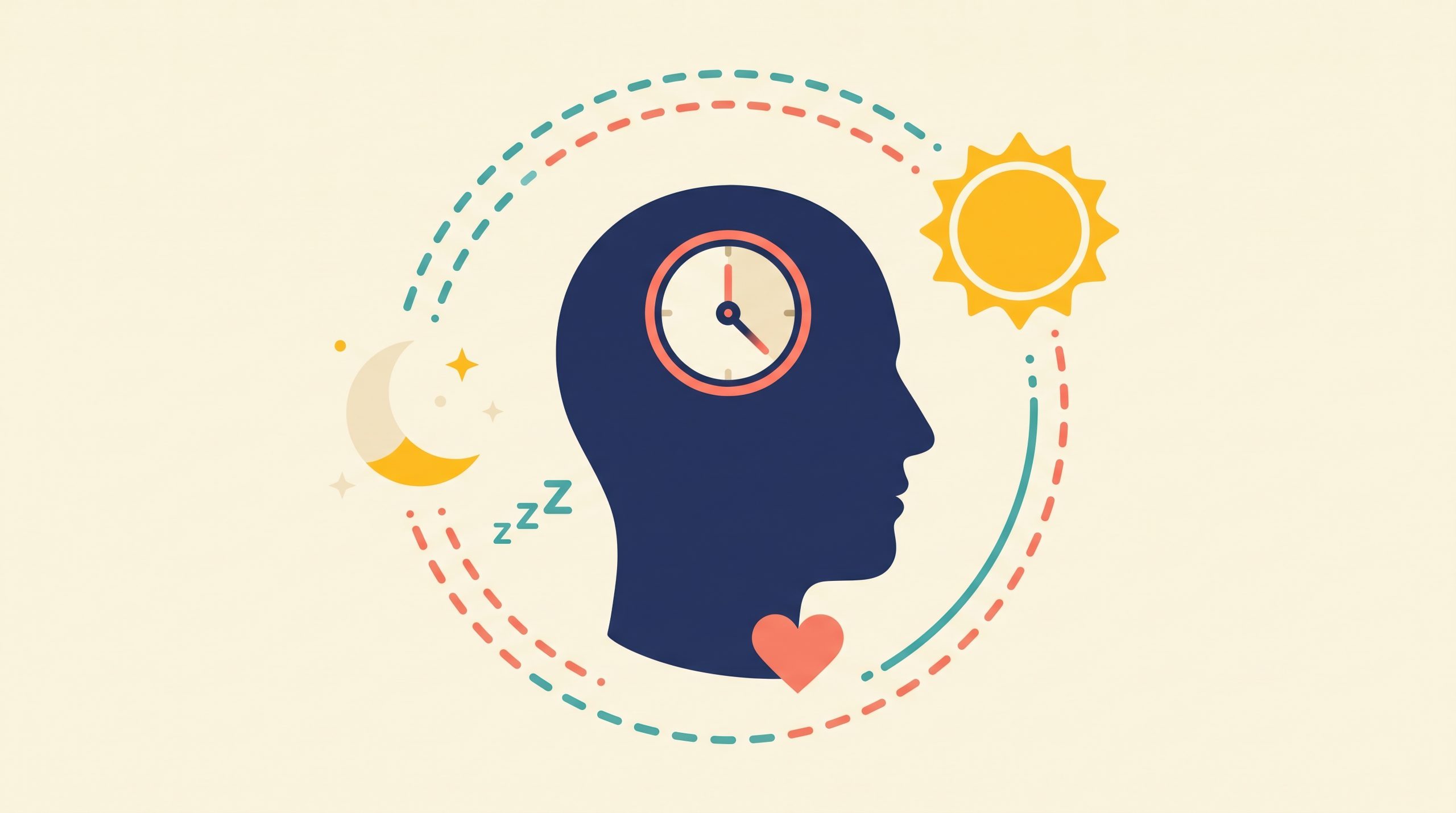
If the day-night rhythm is perceived less clearly—for example, due to spending little time outdoors or having an irregular daily routine—the temporal structure of sleep and wakefulness may also change. This could explain why changes in napping habits among older adults are of interest to researchers. They could provide evidence that the body’s internal temporal organization is no longer functioning as stably as it once did. However, the current study did not prove that such a disruption of the internal clock was actually the cause of the observed differences in mortality.
5. Not Every Irregularity was Problematic
Another observation by the researchers is also noteworthy: After taking additional influencing factors into account, the degree to which the duration of individual naps varied from day to day showed no statistically significant association with mortality. Rather, other characteristics of daytime sleep appeared to be decisive, particularly the average duration, frequency, and timing of sleep episodes.
This is interesting because our sleep patterns do not have to be identical every day. Sometimes, after a restless night, we’re already tired by mid-morning; on other days, we don’t need a short rest until the afternoon. Such occasional differences are not unusual in themselves and do not necessarily indicate health problems. The situation may be different, however, if a person’s sleep pattern changes significantly over a longer period of time. Anyone who increasingly needs longer naps, falls asleep more frequently during the day, or regularly shifts their sleep phases into the morning hours may be showing signs of changes in their sleep-wake rhythm.
From a chronobiological perspective, it is particularly interesting that it is not only the duration of sleep that matters, but also how it fits into the natural daily rhythm. The internal clock influences when our body is geared toward wakefulness and when the need for sleep increases. If these patterns shift permanently, this could indicate changes in circadian regulation. For future research, this raises the question of whether long-term data on daytime sleepiness and napping habits can help detect health changes earlier. The study’s results provide initial clues in this regard, although further investigation is needed to determine the biological mechanisms actually underlying these changes.
6. Could Fitness Trackers Detect Health Warning Signs in the Future?
The researchers also see a potential application for health monitoring in their findings. Modern wearables and activity sensors can already track periods of movement, rest, and sleep patterns. If such data is collected over an extended period, changes throughout the day might become apparent that people themselves may not even be aware of. An increased need for sleep in the morning, longer rest periods, or more frequent naps could serve as additional indicators for assessing health status in the future.

Such monitoring would be particularly interesting for older adults, in whom neurological diseases, cardiovascular problems, or other chronic conditions can develop gradually at first. However, future studies must first show how reliably health risks can actually be inferred from such data. A fitness tracker currently cannot diagnose a disease or make a reliable prognosis based on a nap.
7. Does this Mean that Taking an Afternoon Nap is Unhealthy?
No. The results should by no means be interpreted to mean that older adults should generally give up their afternoon naps. A short nap can still be a beneficial way to rest. What matters more is whether a person’s sleep patterns change significantly. Anyone who suddenly falls asleep much more frequently during the day, feels unusually tired in the morning, or constantly needs sleep despite getting enough rest at night should consult a doctor to investigate possible causes.
Factors such as sleep apnea, medication side effects, chronic illnesses, or changes in the sleep-wake cycle may play a role. The study therefore provides no reason to demonize the afternoon nap. Rather, it shows that changes in sleep habits could conceal important information about one’s health.
What the Results Mean for Chronobiology
The study makes it clear that it is not only the duration of nighttime sleep that is relevant to health. Sleep behavior during the day could also provide valuable insights into how our internal clock functions. In particular, the timing of a nap could be given greater consideration in the future. After all, sleep is not just a matter of duration, but also of the biological time of day at which it occurs.
It remains unclear whether daytime napping in the morning is actually a consequence of circadian changes or primarily reflects existing health problems. Further studies must clarify precisely these connections.
One important insight remains, however: Changes in the sleep-wake cycle should not be automatically dismissed as a normal sign of aging, especially in older adults. Sometimes they can be an early signal that other processes in the body are also changing.
You may also be interested in...
-

How much sleep we get has long been considered an important factor in our health.…
-
A large-scale study conducted in the UK indicates intimate ties between sleep-wake disruption and mood…